

Tensile Structure Materials Guide
Every material in a tensile structure and what it does — the architectural membrane, the structural steel and cables, the plates and fittings, and the foundations. How each is specified, and to what standard.
- The membrane: PVC, PVDF, PTFE, ETFE
- The steel: masts, arches, columns, plates
- The cables and fittings
- The foundations — sized for uplift
Engineering Trusted by India’s Leading Names
28+ years delivering tensile structures for corporate campuses, industrial groups, and institutional developments — built with fabric technology from the world’s leading membrane manufacturers.
 TATA Motors
 L&T
L&T
 Reliance
 Adani
Adani
 Mahindra
 Godrej
 DLF
DLF
 ITC Ltd
 Maruti Suzuki
 GMR Group
 JSW Steel
 Prestige Group
 Sobha
Sobha
 Siemens
 Tata Chemicals
 Tata Tele Business Services
 Power Grid Corporation
 Emaar MGF
 National Law University Delhi
 UPES Dehradun
 Vasant Valley School
 Aditya Birla Group
 Amity University
 Vikram Solar
 Tractors India
 Mazda Colours
 Millennium Structurals
 Sehwag International School
 BSBK Pvt. Ltd.
 17 Miles Hotel
 Rich Harvest School
 The Imperial New Delhi
 Moore Constructions
 Mehra Construction
 Ramprastha
 Minda NexGenTech (UNO Minda)
 Yashmay Public School
 Gyan Mandir Foundation
 Omega Developers
 SPEC
SPEC
 Serge Ferrari
 Mehler
 Heytex
 Versaid
 Pait
Pait
What a tensile structure is actually made of
A tensile structure is four material systems working together: the membrane, the structural steel, the cables and fittings, and the foundations. A weakness in any one of them shows up as a problem in the whole roof, so each is specified to the same design life.
The membrane
The visible surface — a coated fabric or film that carries load in tension. The usual choices are PVC-coated polyester, the same with a PVDF finish, PTFE-coated fibreglass and ETFE film; the comparison page sets them against each other.
The steel
Masts, arches, edge beams and outriggers, usually in IS 2062 / E250 or E350 structural steel, sized by IS 800. Protection is either hot-dip galvanising to IS 4759 (typically 86 µm or more) for exposed work, or a paint system, or both for coastal sites.
Cables and fittings
Edge cables, ridge and valley cables and tie-downs, in galvanised or stainless steel wire rope — commonly 1×19 or 7×19 construction — terminated with swaged end fittings, turnbuckles for adjustment, and forks or pins at the connections.
Membrane hardware
Clamp plates, keder rails or rope-edge pockets that grip the fabric edge, aluminium or stainless corner castings, and the bolts that transfer the membrane tension into the steel.
Foundations
RCC footings to IS 456, most often governed by wind uplift rather than downward load because the roof is so light. Pad footings for masts, and larger mass or piled footings where cables anchor to the ground.
Send your site details for a material specification and an itemised quote.
Architectural membranes compared
A general comparison of the four architectural-membrane families — not a statement that every material is used on every Ekra Decor project.
| Property | PVC-polyester | PVDF-lacquered PVC | PTFE-glass | ETFE film |
|---|---|---|---|---|
| Base | Polyester scrim | Polyester scrim | Glass fibre | None (extruded film) |
| Coating / finish | PVC + lacquer | PVC + PVDF lacquer | PTFE | — |
| Light transmission | ~5–15% | ~5–10% | ~10–20% | up to ~95% |
| UV & weather | Good | Excellent | Outstanding | Outstanding |
| Self-cleaning | Limited | Good | Excellent | Excellent |
| Typical service life | 15–20 yr | ~18–25 yr | 25–30+ yr | Long, patch-repairable |
| Fire reaction | B-class, self-extinguishing | B-class, self-extinguishing | Non-combustible (A-class) | Self-extinguishing |
| Colour | Wide range | Wide range | White / off-white | Clear / fritted |
| Weldable / foldable | Yes / yes | Yes / yes | Welded / no sharp folds | N/A / rolled |
| Relative cost | Low | Medium | High | High |
| Typical use | Everyday canopies & shades | Permanent commercial work | Airports, stadiums, civic | Daylight-critical atria & facades |
PVC-polyester
- Base
- Polyester scrim
- Coating / finish
- PVC + lacquer
- Light transmission
- ~5–15%
- UV & weather
- Good
- Self-cleaning
- Limited
- Typical service life
- 15–20 yr
- Fire reaction
- B-class, self-extinguishing
- Colour
- Wide range
- Weldable / foldable
- Yes / yes
- Relative cost
- Low
- Typical use
- Everyday canopies & shades
PVDF-lacquered PVC
- Base
- Polyester scrim
- Coating / finish
- PVC + PVDF lacquer
- Light transmission
- ~5–10%
- UV & weather
- Excellent
- Self-cleaning
- Good
- Typical service life
- ~18–25 yr
- Fire reaction
- B-class, self-extinguishing
- Colour
- Wide range
- Weldable / foldable
- Yes / yes
- Relative cost
- Medium
- Typical use
- Permanent commercial work
PTFE-glass
- Base
- Glass fibre
- Coating / finish
- PTFE
- Light transmission
- ~10–20%
- UV & weather
- Outstanding
- Self-cleaning
- Excellent
- Typical service life
- 25–30+ yr
- Fire reaction
- Non-combustible (A-class)
- Colour
- White / off-white
- Weldable / foldable
- Welded / no sharp folds
- Relative cost
- High
- Typical use
- Airports, stadiums, civic
ETFE film
- Base
- None (extruded film)
- Coating / finish
- —
- Light transmission
- up to ~95%
- UV & weather
- Outstanding
- Self-cleaning
- Excellent
- Typical service life
- Long, patch-repairable
- Fire reaction
- Self-extinguishing
- Colour
- Clear / fritted
- Weldable / foldable
- N/A / rolled
- Relative cost
- High
- Typical use
- Daylight-critical atria & facades
These are typical industry and manufacturer values for the material type. The specification for a given project — grade, weight, coating, warranty — is confirmed after the site and loads are assessed. HDPE knitted shade mesh is a separate product — it cuts sun but is not waterproof.
The structural materials
The membrane is only half the structure. Everything it pulls on is engineered to match.
- Masts & columns — hollow steel sections carrying the pre-stress and vertical load in compression; kept short and stocky.
- Primary steel — arches, beams and outriggers that give the membrane its shape and span between supports.
- Ridge, edge & valley cables — run inside the membrane edges and folds, collecting the fabric tension into a line.
- Stay & anchor cables — hold masts plumb and tie the structure down against uplift; a factor of safety of about 1:2.2–1:3 on breaking load.
- Steel grade & protection — structural or mild steel, designed to IS 800, hot-dip galvanised to IS 4759 / IS 2629, with paint or a duplex system for coastal and industrial exposure.
The connection materials
Where forces concentrate, the fittings carry them into the steel and the ground.
Membrane plates & keder rails
Clamp the fabric edge to the steel; a welded rope in the hem slides into an extruded rail for a continuous, weathertight fixing.
Gusset & base plates
Distribute concentrated cable and mast forces into the steel and the concrete.
Turnbuckles & tensioners
The adjustable fittings used to bring the membrane to design pre-stress and to re-tension it later.
Anchor bolts & chemical anchors
Fix base plates to the foundations, designed for tension (uplift) as well as shear.
Foundations
Pad, raft or pile footings to IS 456, sized against overturning and uplift — the governing case for a light roof.
Stainless steel
Cables, shackles and turnbuckles are stainless where exposure is aggressive, especially coastal.
What the fabric contributes to the cost
The membrane is one line in a tensile-structure quote — usually a minority of the total, which is dominated by the steel and the installation. What moves the fabric cost:
Across a typical tensile-structure quote, the steel and the installation usually cost more than the membrane. See the cost guide for the full breakdown.
Structures across all these materials
Each project is documented with site photographs and recorded scope.
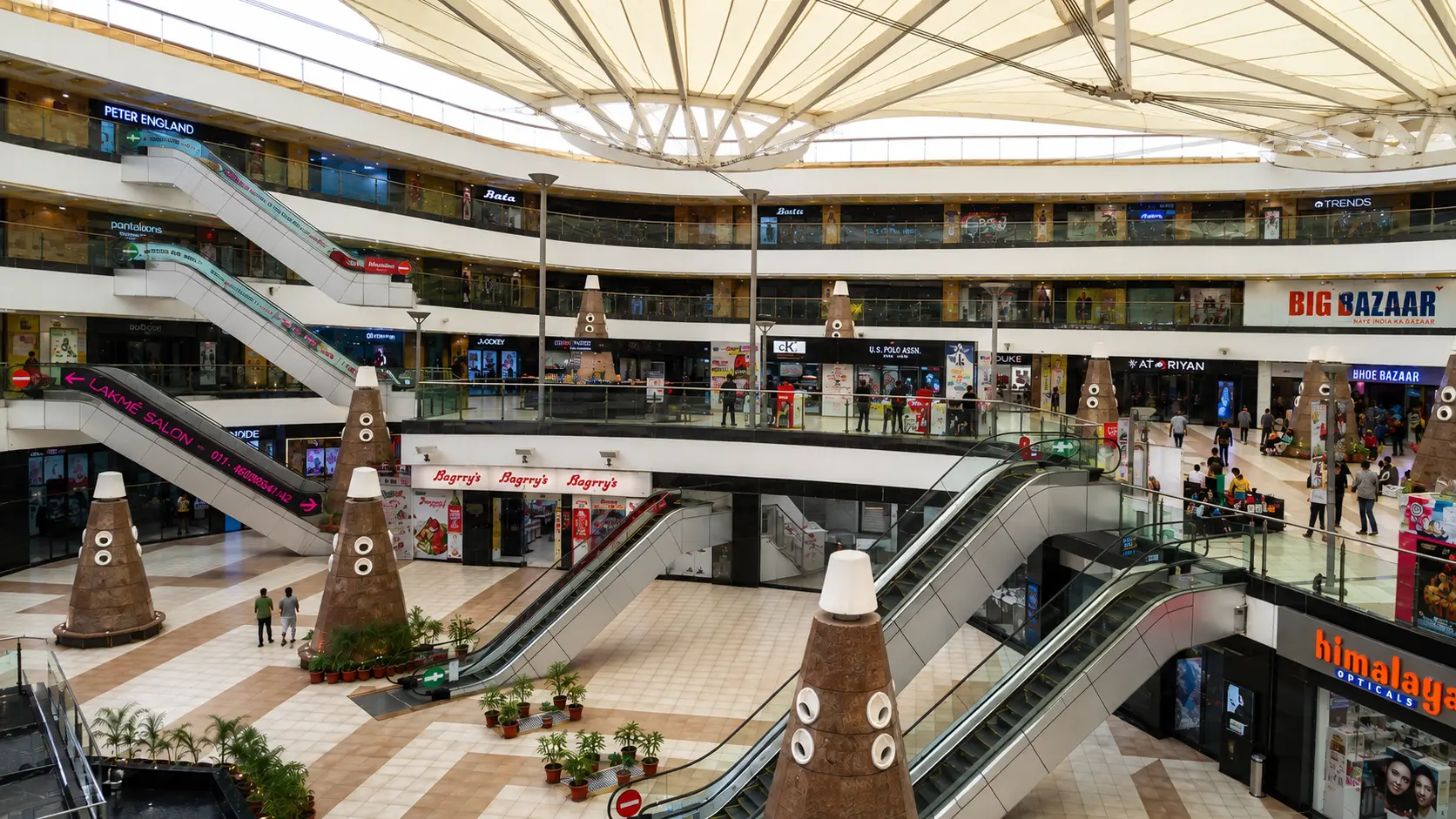 Retail · Courtyard roofVasant Square MallVasant Kunj, New Delhi
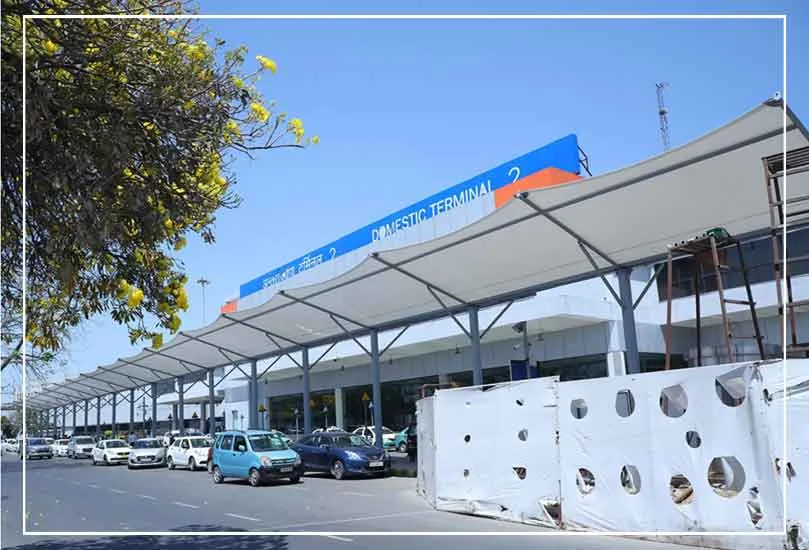 Transit · Walkway canopyIGI Airport, Terminal 2New Delhi
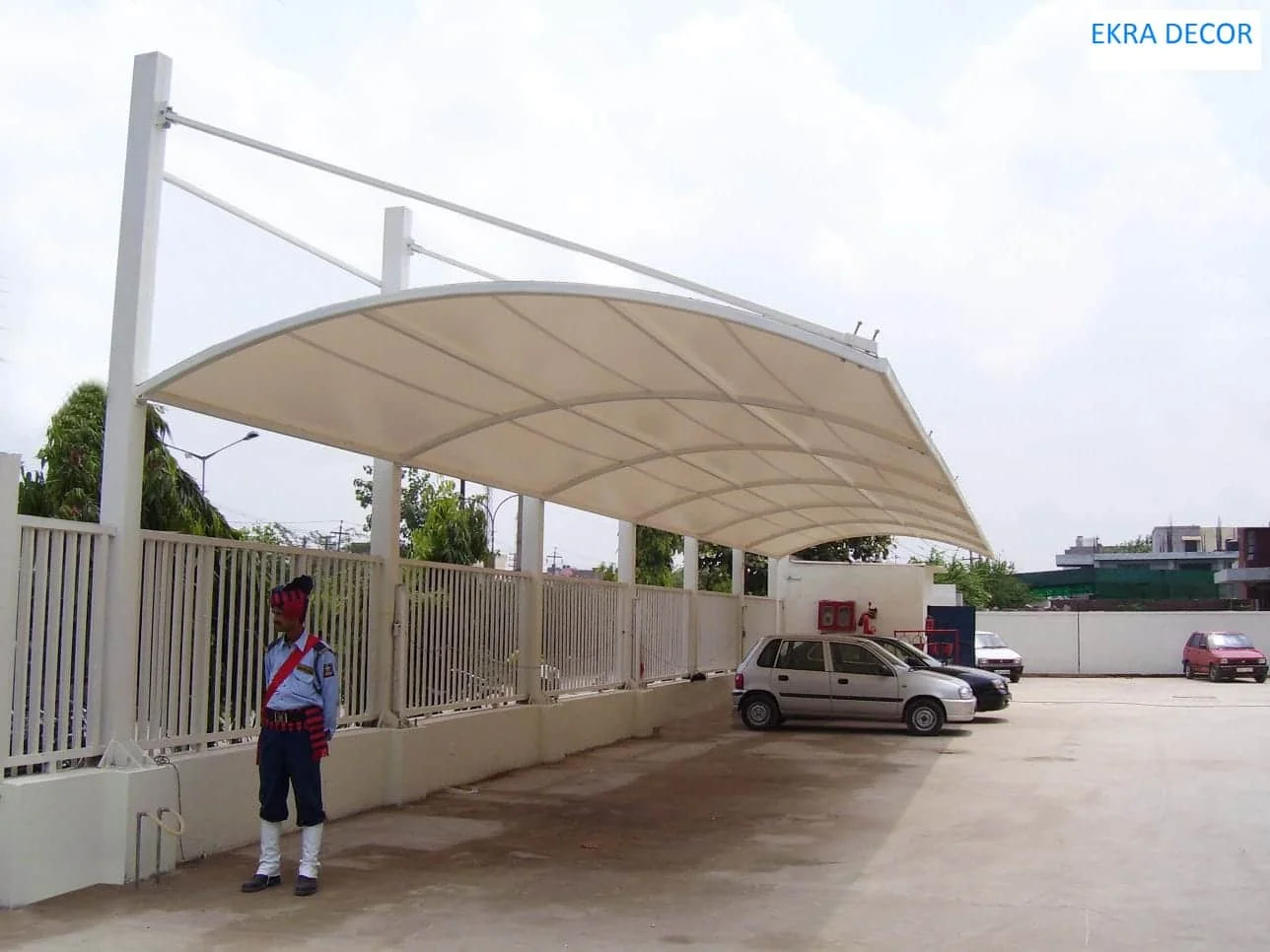 Industrial · Cantilever canopyManesar Car ParkingManesar, Haryana
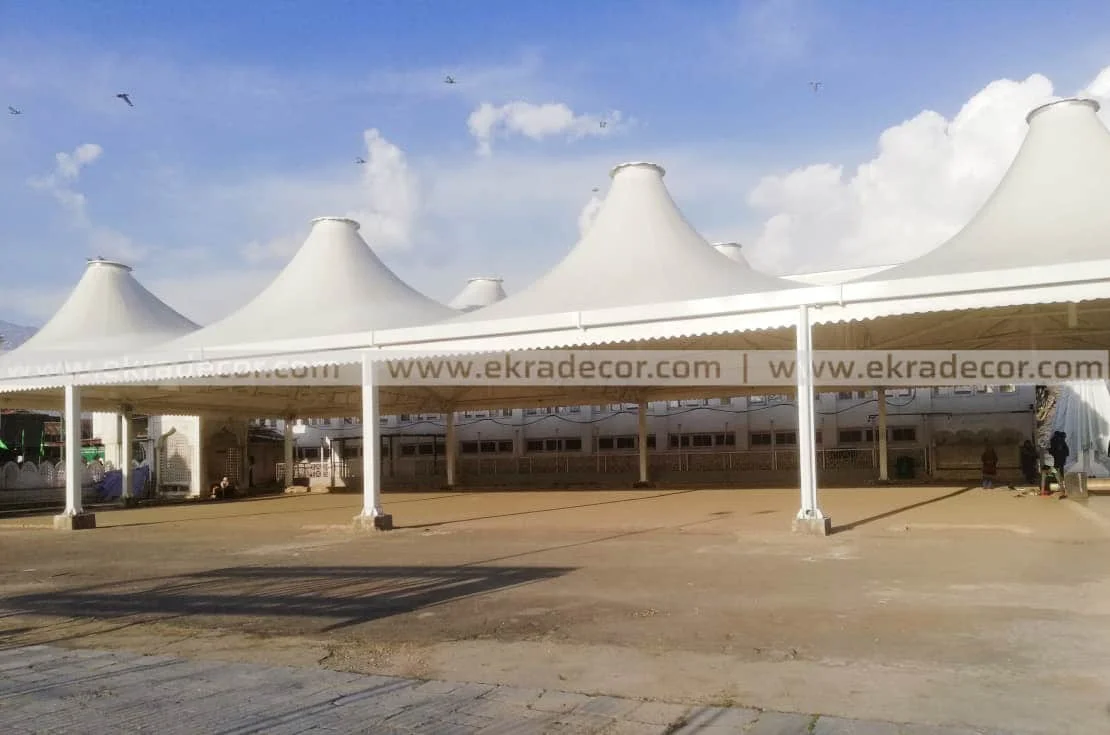
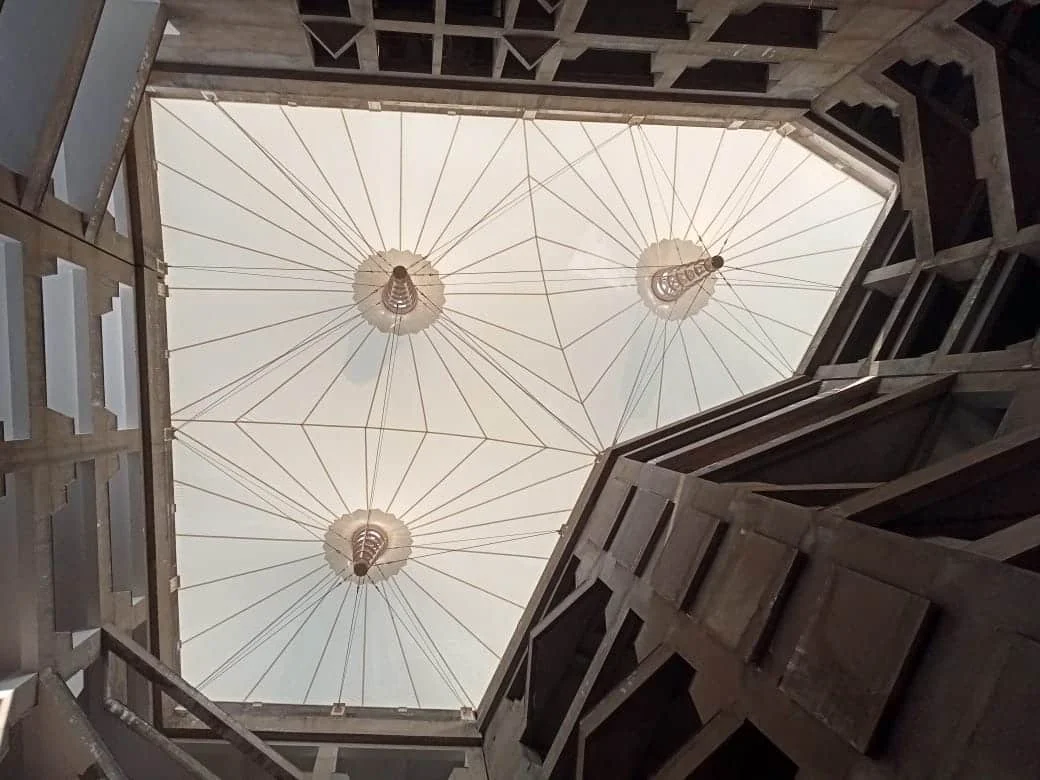 Public · Atrium skylightsGuwahati Tensile StructureGuwahati, Assam
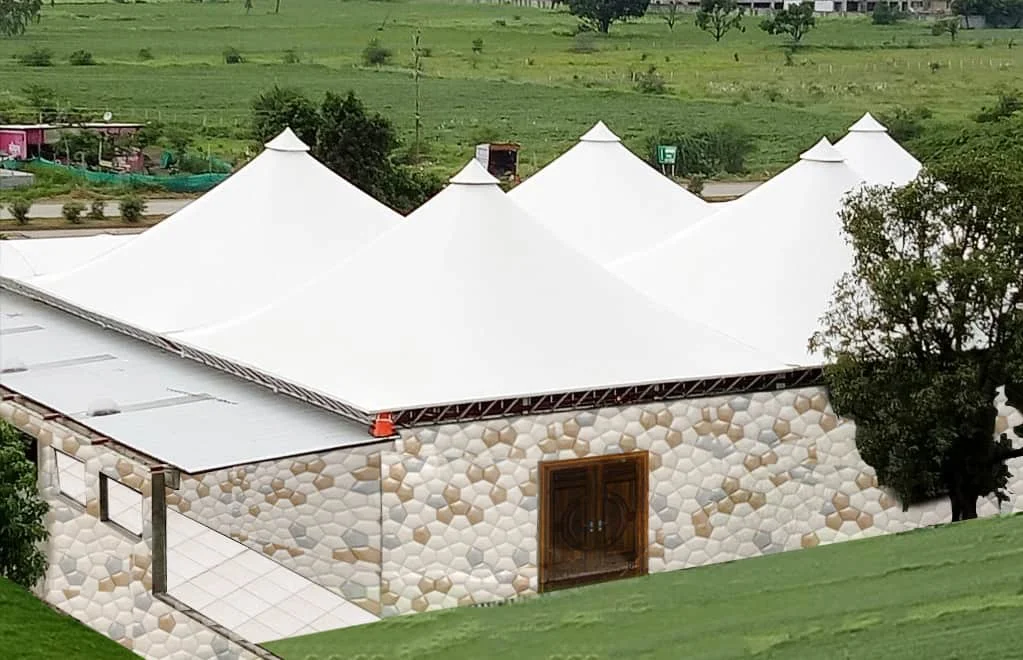 Hospitality · Conical structureBanquet HallIndore, MP
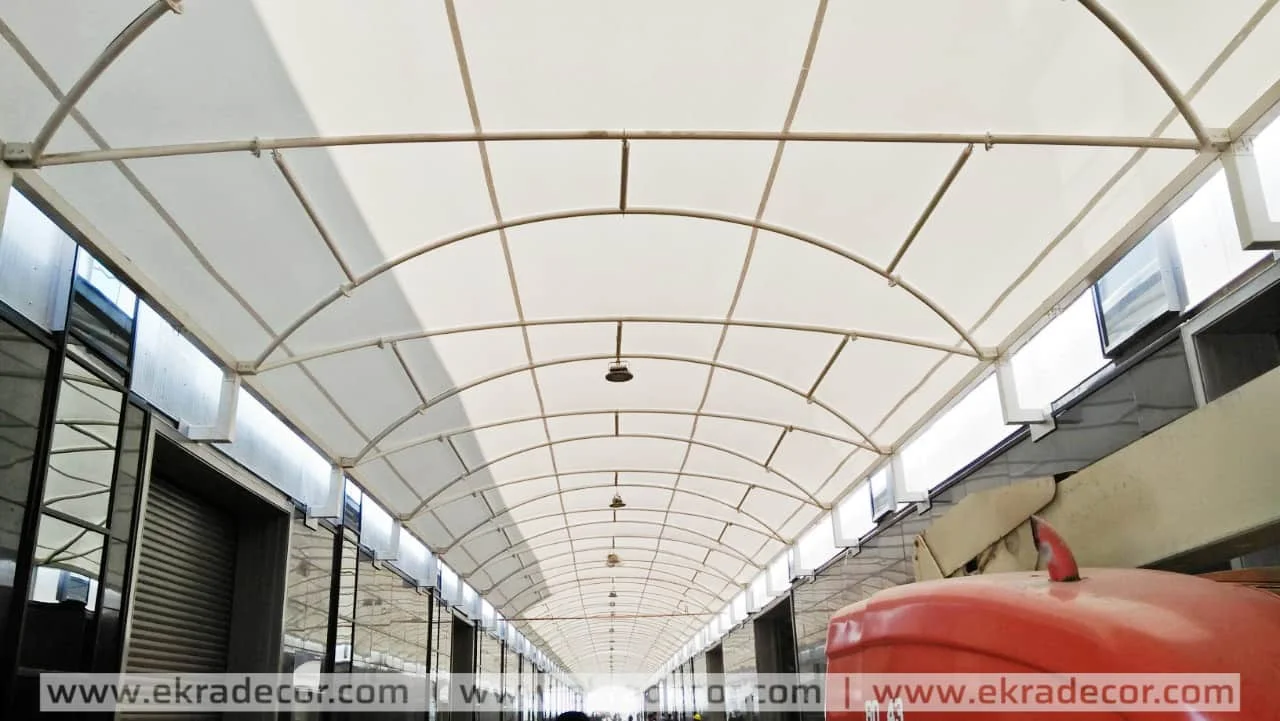 Industrial · Single-span roofDesai ConstructionValsad, Gujarat
Tensile structure materials FAQ
The questions people ask about what goes into a tensile structure.
An architectural membrane (PVC, PVDF, PTFE or ETFE), structural steel (masts, arches, columns, plates), steel cables (edge, ridge, valley, stay), fittings (turnbuckles, membrane plates, anchors), and concrete foundations.
It depends on the design life, the fire class, the light wanted, the budget and the span. See the membrane materials comparison.
Structural or mild steel, designed to IS 800, hot-dip galvanised to IS 4759 / IS 2629 for corrosion protection, with a paint or duplex system added on coastal and industrial sites.
Edge, ridge and valley cables collect the membrane tension into a line and deliver it to the steel; stay and anchor cables hold masts plumb and tie the structure down against wind uplift.
Membrane plates and keder rails — a welded rope in the fabric hem slides into an extruded rail, giving a continuous, weathertight, adjustable fixing.
To IS 456, and sized against uplift and overturning rather than gravity, because the roof weighs almost nothing. Pad, raft or pile footings depending on the loads and the soil.
The tensile structure guide covers form-finding, the design codes and the construction process in full.
Planning a structure?
Send the brief and we specify the membrane, steel and foundations for your site.
Let’s Build Your Structure
Speak directly with our structural engineering team to discuss your project dimensions, material options, or to schedule a free on-site technical inspection across India.
Direct Phone & WhatsApp Hotlines
+91 98102 37952 (Delhi HQ) / +91 93159 45187 (Bangalore) / +91 82879 92289 (Engineering)
Official Email Address
Delhi Factory & Administrative HQ
No. 367 Badam Singh Market, Rangpuri, Near Shiv Murti, NH-8, New Delhi 110037
Bangalore Regional Office
93/5, Kada Agrahara Village, Dodda Gubbi Post, Bangalore, Karnataka - 560077, India
Chattarpur Office
House No. 488, 3rd Floor, Khasra No. 60, 100 Futa Road, Opposite Delhi Jal Board, Near Diwan Bajaj Showroom, Chattarpur Pahari, New Delhi - 110074, India
Request Itemized Price Quote
Fill in your requirements below for an instant engineering assessment & 3D estimate.