

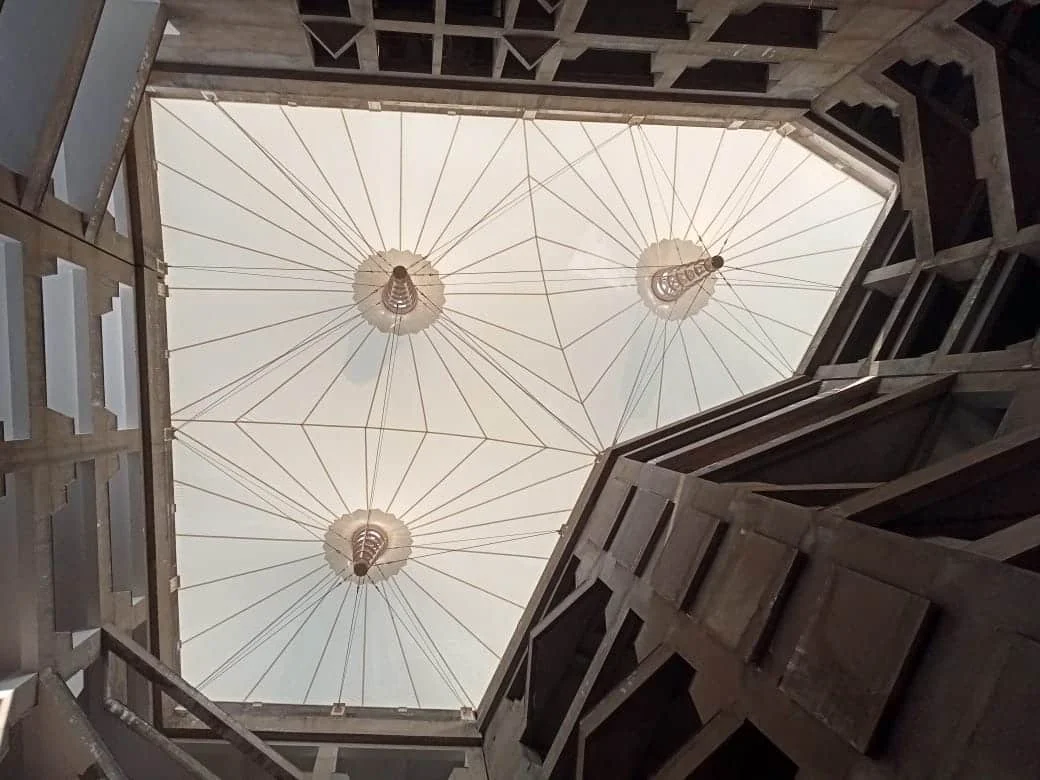
Tensile Fabric & Membrane Materials
How to select the right membrane for architectural, structural and environmental requirements — what the materials are, how they are constructed, how they perform, how they compare, and how a fabric is chosen for a project.
- PVC, PVDF, PTFE, ETFE & HDPE explained
- Construction, performance & fabrication
- Comparison table, decision matrix & a selection framework
- Written for architects, engineers, contractors & clients
There is no single best membrane
A tensile roof is only as good as the fit between the fabric and the job. The membrane is a structural element, an environmental filter and an architectural surface at the same time — and the right one is decided by the project, not by price or by which material is most talked about.
Five families cover almost every project: PVC-coated polyester, the same fabric with a PVDF top finish, PTFE-coated fibreglass, ETFE film, and HDPE knitted mesh for shade-only work. They differ in what they are made of, how they carry load, how much light they pass, how they age, how they are joined, and what they cost — and those differences only become advantages or drawbacks in the context of a specific application, span, climate and specification.
This guide walks through the material science, then the five families in turn, then three ways to compare them, then a step-by-step way to arrive at a shortlist. Numbers are given as typical ranges; the exact figure for a project always comes from the chosen product’s datasheet and the site conditions. For the wider engineering — form-finding, load analysis, foundations, the design codes — see the tensile structure guide.
- Membrane
- The tensioned surface — a coated woven fabric or an extruded film — that spans between the steel and cables and keeps the weather out.
- Substrate / base fabric
- The woven cloth (polyester or glass fibre) that carries the load. ETFE has no substrate; it is film all through.
- Coating
- The polymer (PVC or PTFE) applied to the base cloth to make it waterproof, protect the yarn and give the surface its properties.
- Top finish / lacquer
- A thin outer layer (acrylic, PVDF, or the PTFE itself) that handles UV, dirt and cleanability.
- Composite membrane
- The finished product — substrate + coating + finish — behaving as one material with its own weight, strength and translucency.
What a tensile membrane is, and why geometry drives the choice
A membrane roof is not a lighter version of a conventional roof. It carries load in a completely different way, and that changes what the material has to do.
Conventional roof
A deck or sheet spans in bending between beams and purlins. It resists load by being stiff. It can be flat. The covering carries little structural load itself — the frame does the work.
Tensile membrane
A thin surface with almost no bending stiffness. It can only carry load by pulling — in tension — along its curvature. It must be doubly curved and pre-stressed, and the fabric itself is a load path.
Because the fabric is a structural element, choosing it is a structural decision: the grade and weight are sized for the span, the curvature and the wind load. And because it is also the visible surface and the daylight filter, it is an architectural decision at the same time. The two cannot be separated — which is why the material is picked alongside the form, not after it. See form-finding for how the shape is generated.
How membrane materials are constructed
A coated architectural fabric is a layered composite. Each layer does one job, and the layers are not the same from one material to the next.
The four elements
Base fabric (substrate). A woven cloth — high-tenacity polyester yarn, or fine glass filaments — that carries the tension. The weave is directional: warp and weft behave differently, which is why panels are cut to a set orientation.
Coating. A polymer applied to both faces — PVC plastisol, knife- or dip-coated; or PTFE, built up in repeated dips and sintered. It seals the fabric, makes it waterproof, bonds the weave and protects the yarn from UV and abrasion.
Top finish. A thin outer layer for weathering, dirt release and cleanability: an acrylic lacquer on economy PVC, a PVDF lacquer on the better grades, or — for PTFE — the fluoropolymer coating itself, which needs no separate finish.
Reinforcement. Not a layer across the whole sheet but built up locally: keder ropes and webbing belts welded into the edge hems, extra fabric plies and steel plates at the corners where forces concentrate.
A PVC / PVDF membrane is a five-layer sandwich; a PTFE membrane is a glass core sealed in fluoropolymer; ETFE is a single homogeneous film with no layers at all. Any diagram that shows every membrane with the same stack is wrong.
PTFE-glass: replace the polyester core with woven glass fibre and both coatings with PTFE — and drop the separate lacquer. ETFE: one extruded fluoropolymer film, optionally with a printed frit pattern.
A visual material selector
The starting point — what each material looks like, how it is built, how it behaves with light, where it is typically used, and its cost position. The deep dives that follow have the detail. Cost is shown as a category, not a price.
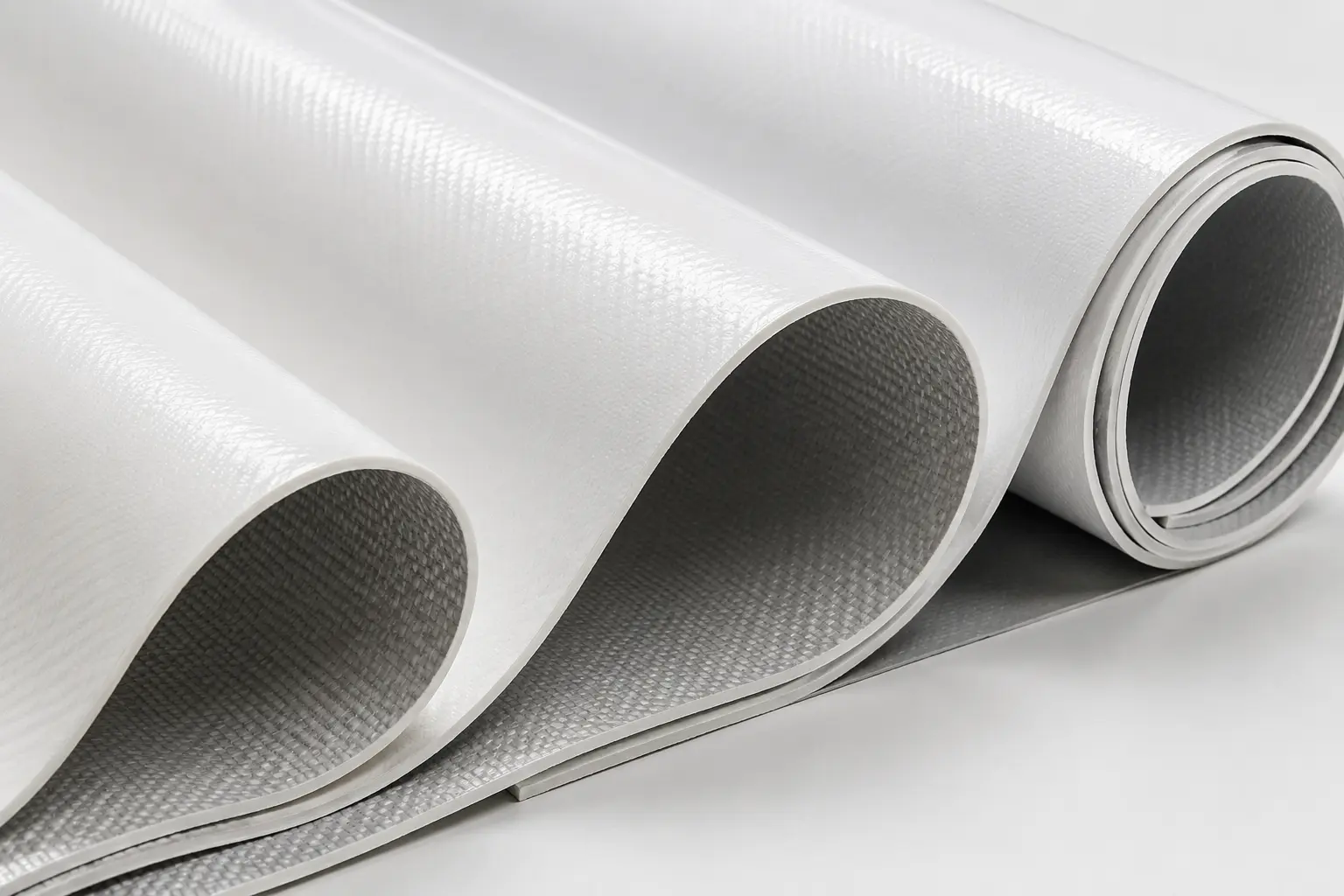
- Build
- Polyester scrim + PVC + lacquer
- Light
- Low — opaque to lightly translucent
- Typical use
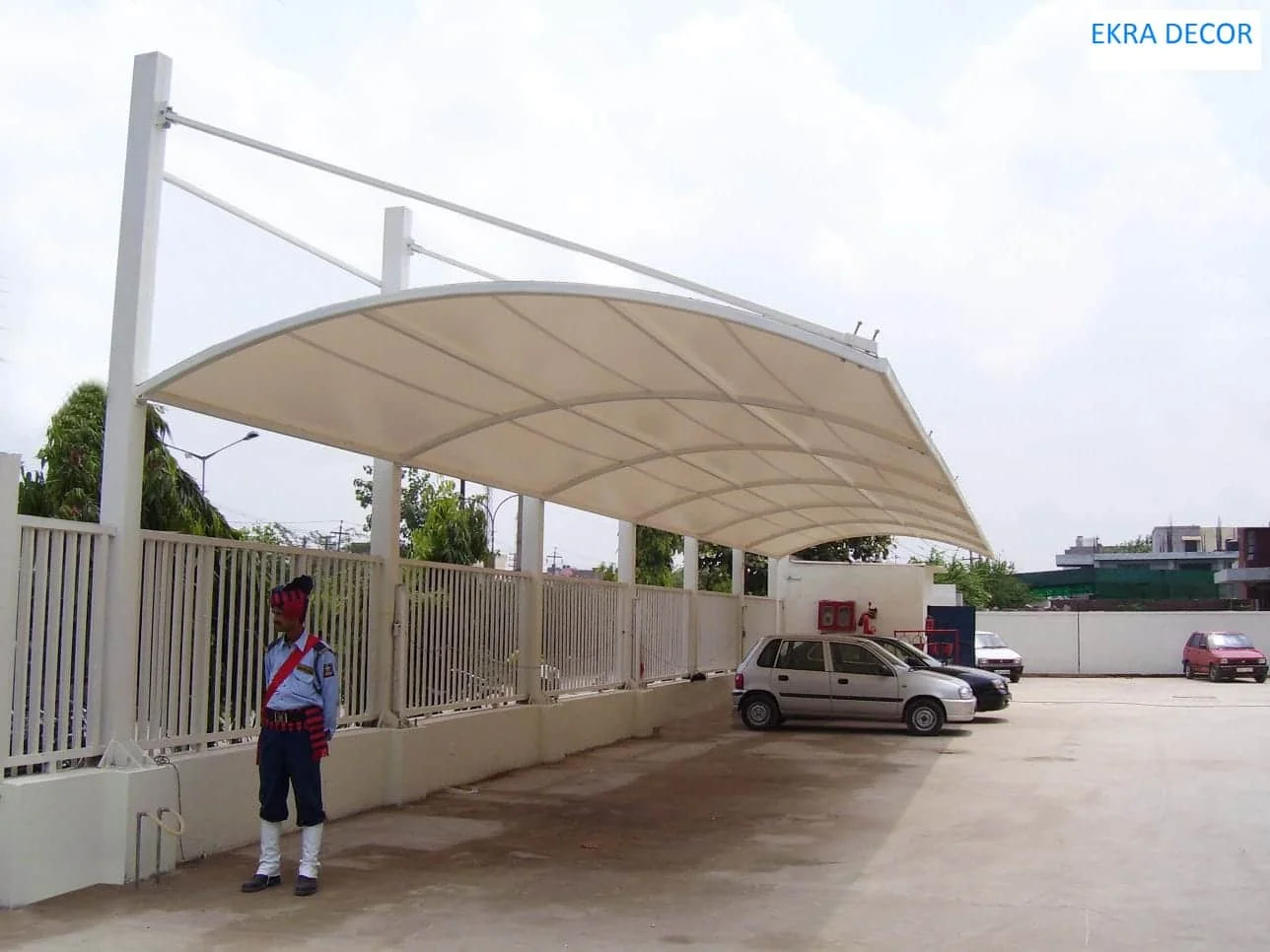
- Car parks, walkways, commercial canopies
- Character
- Flexible, weldable, folds, widest colour range
- Cost
- Low
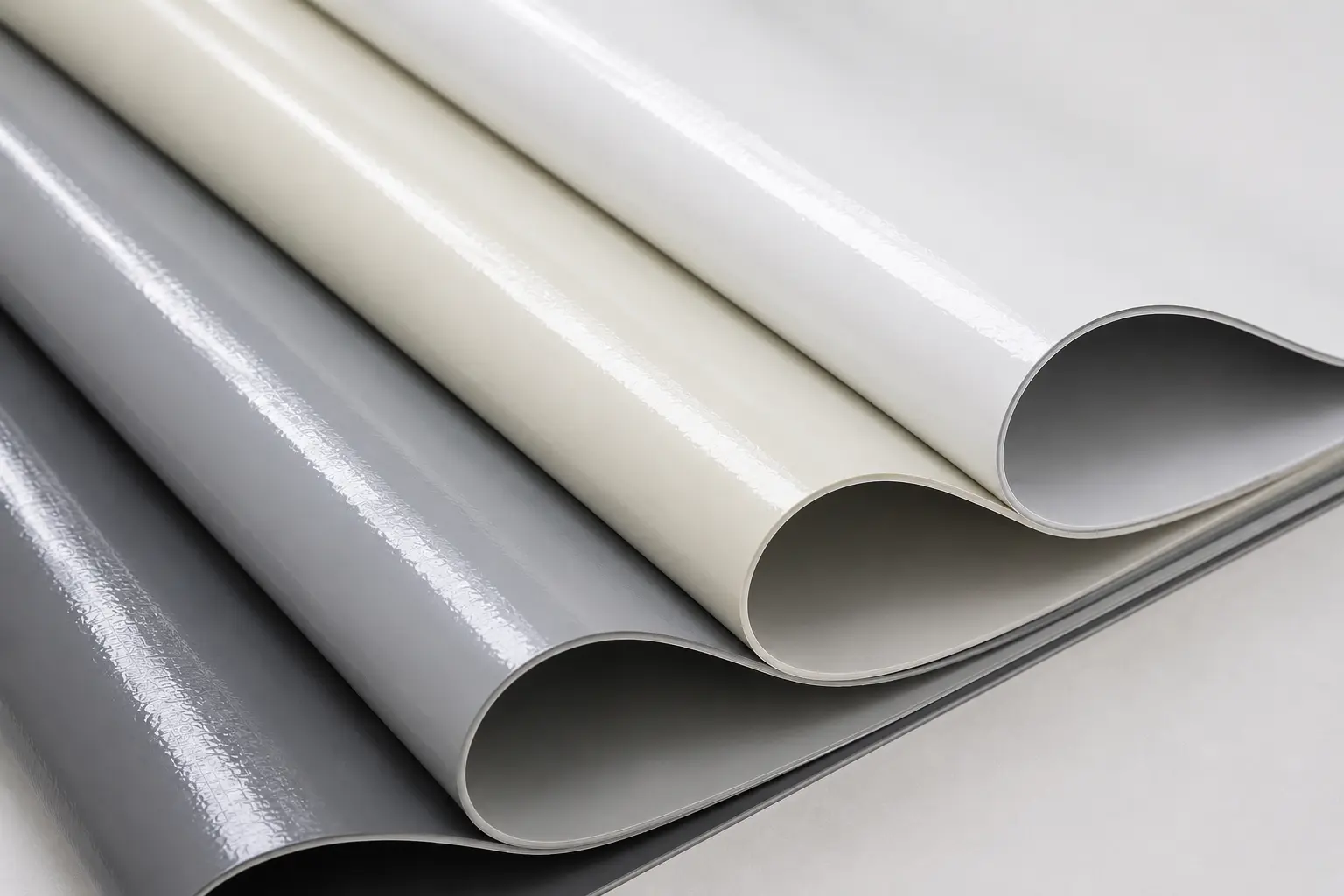
- Build
- PVC-polyester with a PVDF top lacquer
- Light
- Low
- Typical use
- Permanent commercial & public work, dusty sites
- Character
- As PVC, but cleaner surface, better colour hold
- Cost
- Low–Moderate
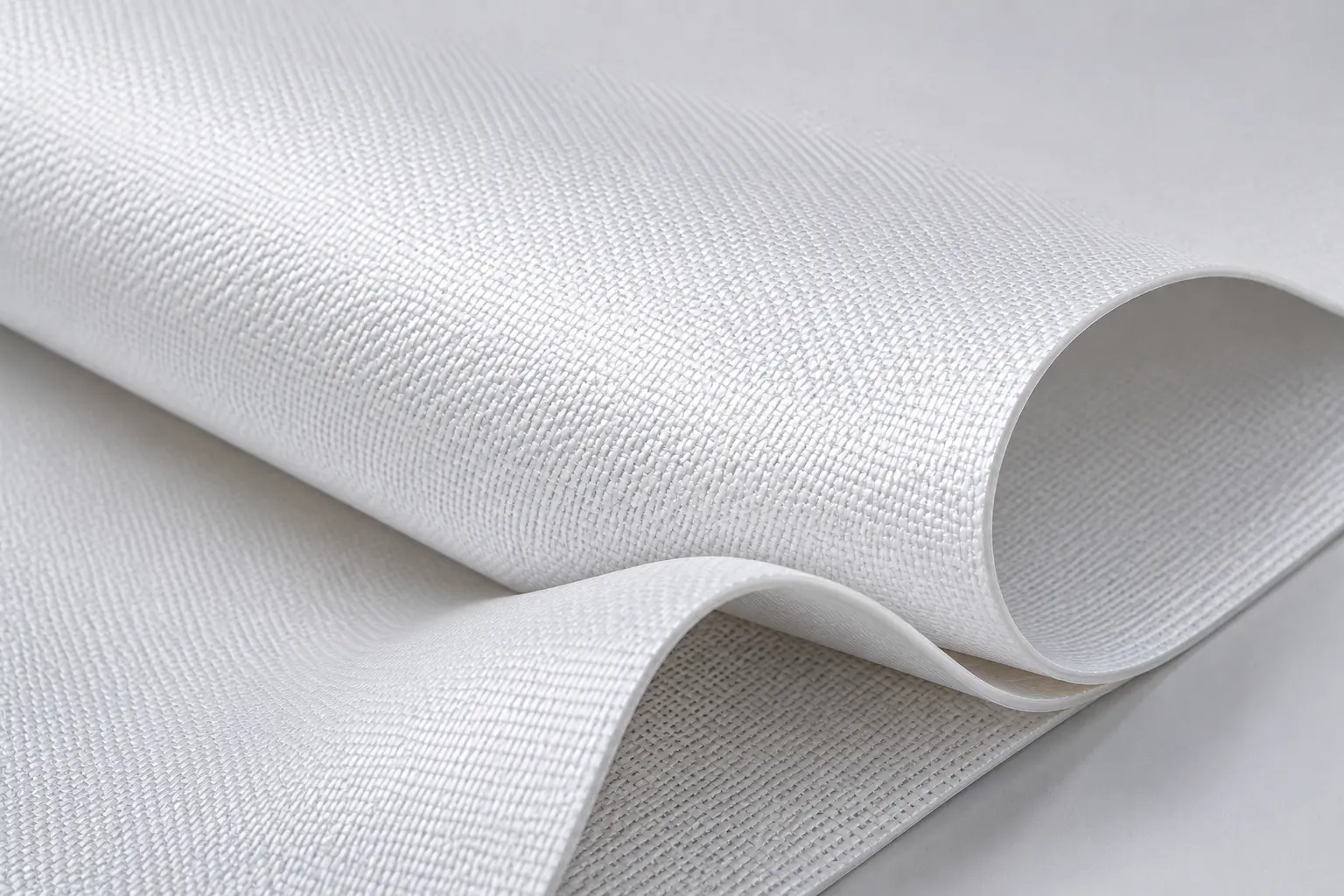
- Build
- Woven glass fibre + sintered PTFE
- Light
- Moderate — evenly diffused
- Typical use
- Airports, stadiums, civic landmarks, long-span roofs
- Character
- Non-combustible, self-cleaning, white only, no sharp folds
- Cost
- High
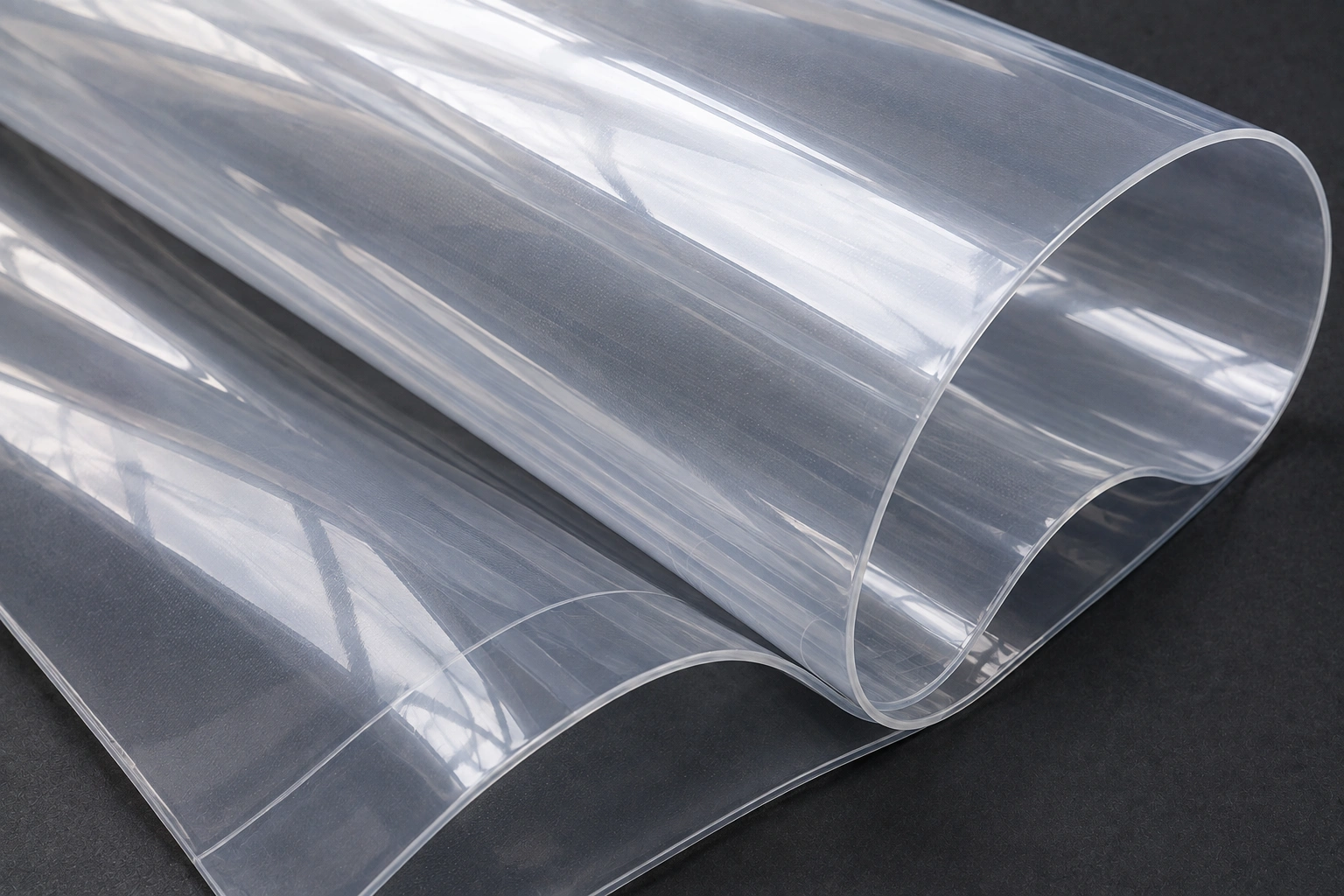
- Build
- Single extruded film — no weave, no coating
- Light
- High — up to ~90–95% for clear film
- Typical use
- Daylit atria, facades, botanical & sports enclosures
- Character
- Almost weightless; needs a support net or an air supply
- Cost
- High — system-dependent
- Build
- UV-stabilised high-density polyethylene mesh
- Light
- Open weave — a rated shade / UV-block percentage
- Typical use
- Open shade sails, car ports, play areas, nurseries
- Character
- Breathable, not waterproof, lowest cost
- Cost
- Low
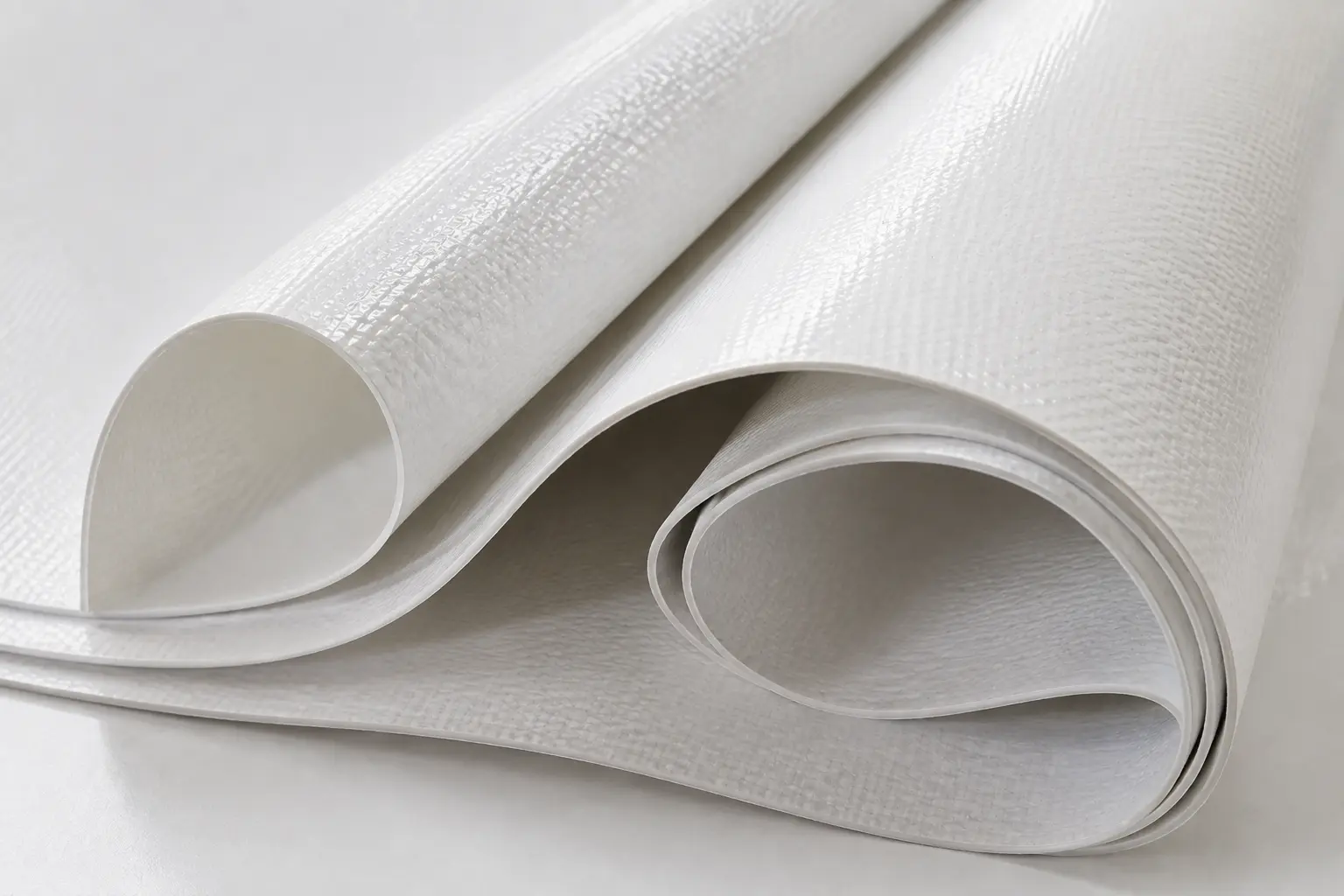
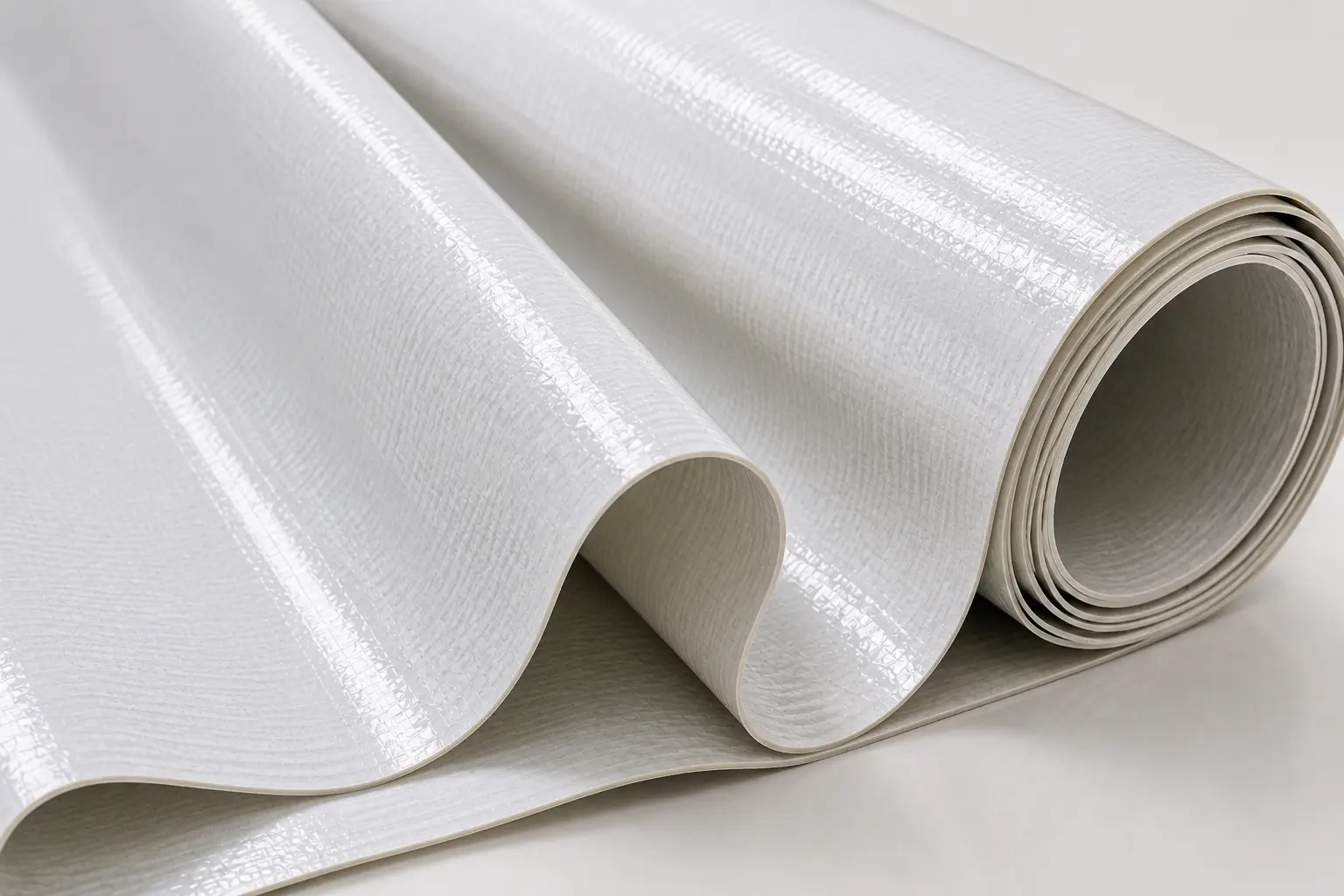
The material photographs above are illustrative surface studies, not a specific manufacturer’s product or an Ekra Decor project. Colour, weave and gloss vary widely by grade and maker.
PVC-coated polyester
The workhorse architectural fabric — behind most tensile canopies, car-parking shades and covered walkways.
What it is
A woven polyester scrim coated on both faces with PVC plastisol and finished with a thin surface lacquer. The polyester yarn does the structural work; the PVC makes the fabric waterproof, bonds the weave and protects the yarn; the lacquer — acrylic on economy grades, PVDF on the better ones — carries the weathering and dirt-release duty.
Grades
Sold as Type I to Type V by weight and breaking strength, roughly 700 to 1,400 g/m². Heavier types span further and carry more load; lighter types suit small canopies and shade sails. Within a type, the coating formulation, the topcoat and the warranty term still vary by manufacturer — two “Type III” fabrics are not identical. Serge Ferrari is one of the premium PVC-membrane brands we specify; its Précontraint process pre-stresses the weave for lower creep.
How it behaves
Flexible and forgiving to fabricate. Seams are joined by high-frequency welding and are as strong as the parent fabric. It ships folded, which cuts transport cost and eases installation on a congested site. UV and weather resistance are good with a plain lacquer and better with PVDF. Over decades the plasticiser in the PVC slowly migrates, which is the main ageing mechanism and the reason the topcoat matters.
Light & appearance
Available in almost any colour — the widest range of any architectural membrane — plus translucent white grades that pass a modest amount of diffused light. A darker colour absorbs more solar heat and shows dirt less; a light colour reflects heat and keeps the space below cooler.
- Base
- Woven high-tenacity polyester scrim
- Coating / finish
- PVC both faces + acrylic or PVDF lacquer
- Joining
- High-frequency / hot-wedge welding
- Fire reaction
- Self-extinguishing B-class (e.g. B-s2,d0 / DIN 4102 B1) — verify the product
- Light transmission
- Low — opaque to lightly translucent (grade / colour dependent)
- Typical service life
- Product, exposure and maintenance dependent; commonly quoted as a mid-range figure for a plain lacquer, longer with PVDF
- Handling
- Ships folded
- Relative cost
- Low
Consider it when
Everyday canopies, car parks and walkways; wide colour choice needed; budget-led; the fabric is a minority of the cost anyway; a folded delivery helps the site.Look elsewhere when
A non-combustible A-class reaction is required; a 30-year design life is specified; maximum daylight is the point; the surface must stay pristine with minimal cleaning.Full detail on the PVC fabric page.
PVDF-lacquered PVC
Not a separate fabric — the same PVC-coated polyester with a fluoropolymer top finish that keeps it cleaner for longer.
What it is
A PVC-coated polyester membrane whose outermost layer is a thin PVDF (polyvinylidene fluoride) lacquer instead of a plain acrylic one. PVDF is a fluoropolymer — chemically inert, very stable under UV, and low-friction so dirt does not key to it. The base fabric and the PVC coating are unchanged; only the finish is different.
Why it is used
The PVDF surface stays cleaner, holds colour longer and resists chalking and UV degradation better than a plain lacquer. On a dusty or polluted site the difference is visible within a couple of years. It also slows the plasticiser migration that ages plain PVC, which is why the typical service life is longer. The cost uplift over plain PVC is modest.
Fabrication note
PVDF is non-stick by design, which is exactly why welds do not take to it. On many products the lacquer is locally removed — ground or solvent-cleaned back — along the seam lines before welding, then the seam is over-lacquered. It is a routine step, but it is a step, and it is why seam detailing is specified with the fabric.
Where it stops
It is still a B-class self-extinguishing material, not non-combustible — the PVDF finish does not change the fire class. Light transmission is not improved. For a non-combustible A-class roof or a 30-year civic landmark, the answer is PTFE, not a better lacquer on PVC.
- Base
- Woven polyester scrim (same as PVC)
- Coating / finish
- PVC both faces + PVDF top lacquer
- Joining
- Welding after local removal of the PVDF along seams
- Fire reaction
- Self-extinguishing B-class — unchanged by the finish
- Surface
- Cleaner, better colour retention, largely rinses in rain
- Typical service life
- Longer than plain-lacquered PVC; product / exposure dependent
- Relative cost
- Low–Moderate (small uplift over plain PVC)
Consider it when
The structure is permanent; the site is dusty or polluted; colour must stay true; a longer service life is wanted without moving to PTFE; the small cost uplift is acceptable.Look elsewhere when
A non-combustible reaction is required; daylight is critical; the budget cannot take any uplift and the structure is genuinely short-life.Full detail on the PVDF fabric page.
PTFE-coated fibreglass
The premium architectural membrane — non-combustible, effectively self-cleaning, and specified where a roof has to last for decades.
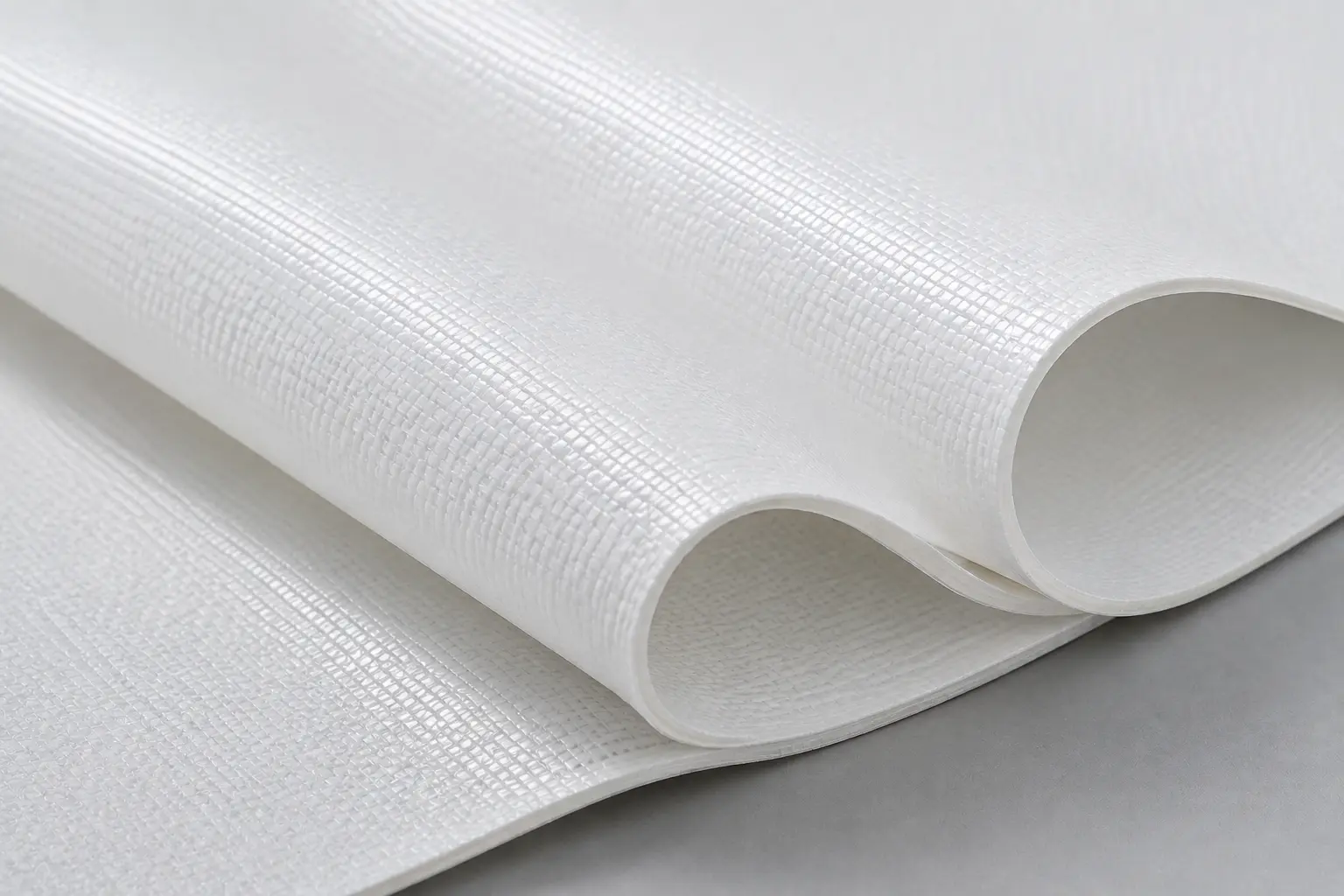
What it is
A woven glass-fibre cloth passed repeatedly through a PTFE (polytetrafluoroethylene) dispersion and sintered at high temperature so the coating fuses into a continuous film. PTFE is the same fluoropolymer as non-stick cookware. The finished fabric is white, slightly stiff, and highly stable dimensionally and chemically.
How it behaves
The low-friction surface sheds dirt with rainfall, so the roof stays white and light transmission actually rises over the first years as construction dust washes off. It is stable across a very wide temperature range. It does not contribute fuel to a fire — the glass base cannot burn and the PTFE adds almost nothing — so it typically carries a non-combustible A-class reaction under EN 13501-1. Many PTFE roofs from the 1970s and 80s are still in service.
The trade-offs
The glass base is brittle. PTFE fabric cannot take a sharp fold — a crease can break the glass filaments — so panels ship rolled on wide cores and are handled carefully on site. It costs more than PVC, comes in white or off-white only, and has a longer lead time. Fabrication is slower and needs more skill.
Where it is used
Stadium and arena roofs, airport terminals, transport hubs and civic landmarks — anywhere a long design life and a non-combustible reaction justify the cost. It is also the usual answer for very large clear spans where the roof is on show.
- Base
- Woven glass fibre
- Coating
- Sintered PTFE, both faces (no separate lacquer)
- Joining
- Heat-and-pressure welding; skilled work
- Fire reaction
- Non-combustible — typically A2-class under EN 13501-1; passes NFPA 701 (verify the product)
- Light transmission
- Moderate, evenly diffused — rises as the surface self-cleans
- Colour
- White / off-white
- Handling
- Ships rolled — no sharp folds
- Typical service life
- Long — often quoted as 25–30 years or more; product / exposure dependent
- Relative cost
- High
Consider it when
A non-combustible A-class reaction is required; a 25–30-year+ design life is specified; the roof is a landmark or a very large span; low maintenance and a permanently white surface matter.Look elsewhere when
Colour other than white is needed; the budget is led by first cost; the geometry needs a fabric that folds; the lead time is tight; the structure is modest and short-life.Full detail on the PTFE fabric page.
ETFE film
A transparent film, not a coated fabric — used where daylight matters more than anything, and compared on its own terms.
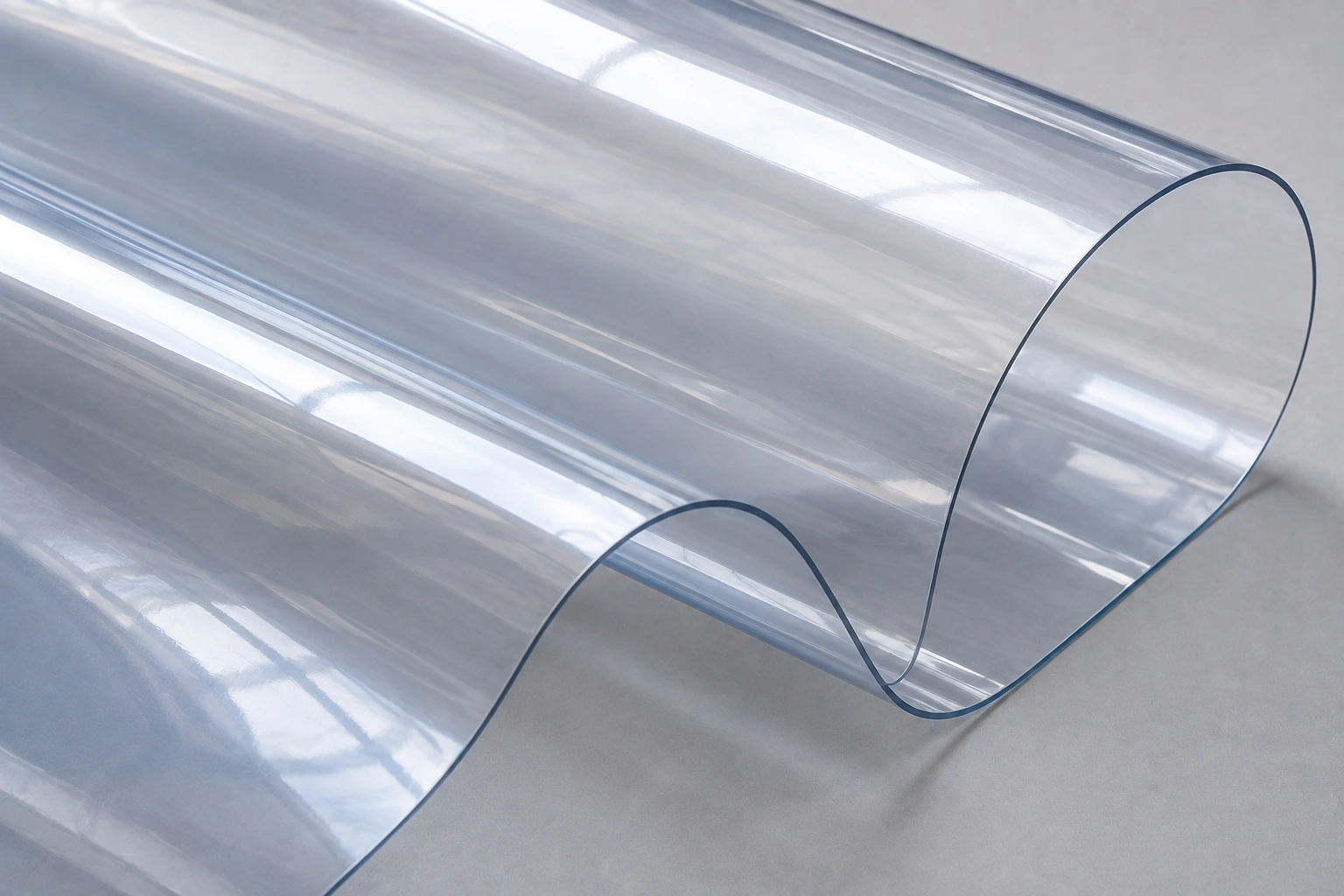
What it is
ETFE (ethylene tetrafluoroethylene) is an extruded fluoropolymer film. It is not woven and not coated — it is a thin, homogeneous, highly transparent sheet. Because the film itself is weak in tension, it is used in one of two ways.
Single skin or cushions
Single-skin ETFE is tensioned like a membrane but needs support at close centres — a cable net or a closely-spaced frame — because it cannot span far on its own. Pneumatic cushions are the more common form: two or more layers welded at the edges and kept inflated by a small, continuous, low-pressure air supply. The inflation makes each panel rigid and adds an insulating air gap; a middle layer with an offset printed pattern can be moved by pressure to vary shading.
Key properties
It transmits up to roughly 90–95% of visible light — and UV as well, which suits planting — at a per-layer weight of a few hundred grams per square metre, so the supporting structure is minimal. The surface is inert and self-cleaning, and service life is long. In a fire it is self-extinguishing: it softens and vents rather than dripping flame, which can help clear smoke.
The trade-offs — and why it is not a like-for-like swap
ETFE has low puncture and abrasion resistance, so it is kept out of reach and protected from foot traffic and falling debris. Cushion systems need a continuous air supply and its power — a small ongoing running cost and a maintenance item. Acoustics under a taut film can be lively. Solar control needs printed fritting or extra layers. Comparing ETFE to PVC or PTFE on “tensile strength” or “fold resistance” misses the point: it is chosen for transparency and weight, and designed around its constraints.
- Form
- Extruded film — single-skin over a net, or air-filled cushions
- Base / coating
- None — homogeneous film, optional printed frit
- Joining
- Thermal welding of the film
- Fire reaction
- Self-extinguishing; softens and vents (verify the product)
- Light transmission
- High — up to ~90–95% for clear film; reduced by fritting
- Weight
- Very low — a small fraction of glass, per layer
- Services
- Cushions need a continuous low-pressure air supply
- Typical service life
- Long; product / exposure dependent
- Relative cost
- High — system-dependent (air handling, framing)
Consider it when
Daylight close to glass is the priority; the roof or facade must be as light as possible; a large area needs enclosing cheaply in structure terms; planting needs UV; a curved transparent envelope is wanted.Look elsewhere when
The surface is within reach or exposed to impact; there is no appetite for an air-supply system; an opaque or shaded roof is actually wanted; acoustics under the roof are critical and untreated.Full detail on the ETFE fabric page, and the wider picture on ETFE structures.
HDPE / shade fabric
A shade textile, not a building-envelope membrane. Useful for the right job, and out of its depth for a weatherproof roof.
What it is. A knitted or woven cloth of UV-stabilised high-density polyethylene (HDPE) monofilament or tape. The open structure is the point — it cuts a rated percentage of sun and UV while staying breathable. It is rated by shade factor and UV-block percentage, not by tensile grade.
How it behaves. Air passes through, so wind pressure on the structure is lower than on a sealed membrane and hot air does not build up underneath. Most rain also passes through — it will keep a light shower off but it is not waterproof and cannot be detailed to be. Panels are hemmed and sewn or clamped, not welded. Service life is shorter than a coated membrane but good grades are warranted for UV performance for several years.
Where it fits. Open shade sails over play areas, seating and pool decks; car ports and school yards where a little rain is acceptable; nurseries and agriculture where controlled light and airflow matter. It is the lowest-cost option and the quickest to install.
Where it does not. Anywhere the brief says “dry”. A covered walkway, a car park that must protect vehicles from rain, an entrance canopy or any roof over a building all need a coated membrane. Choosing shade cloth to save cost on a job that needs a waterproof roof is the most common material mistake.
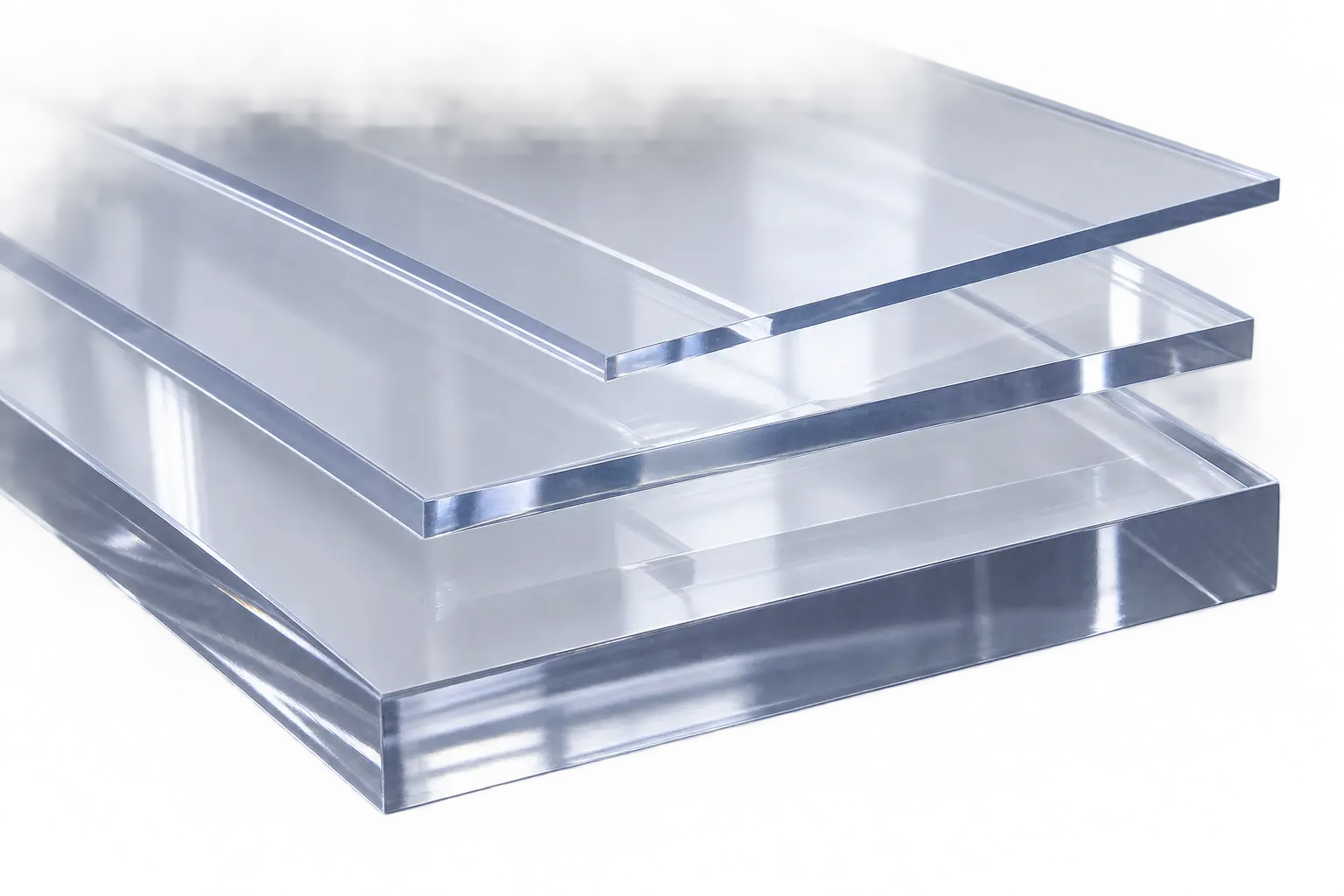
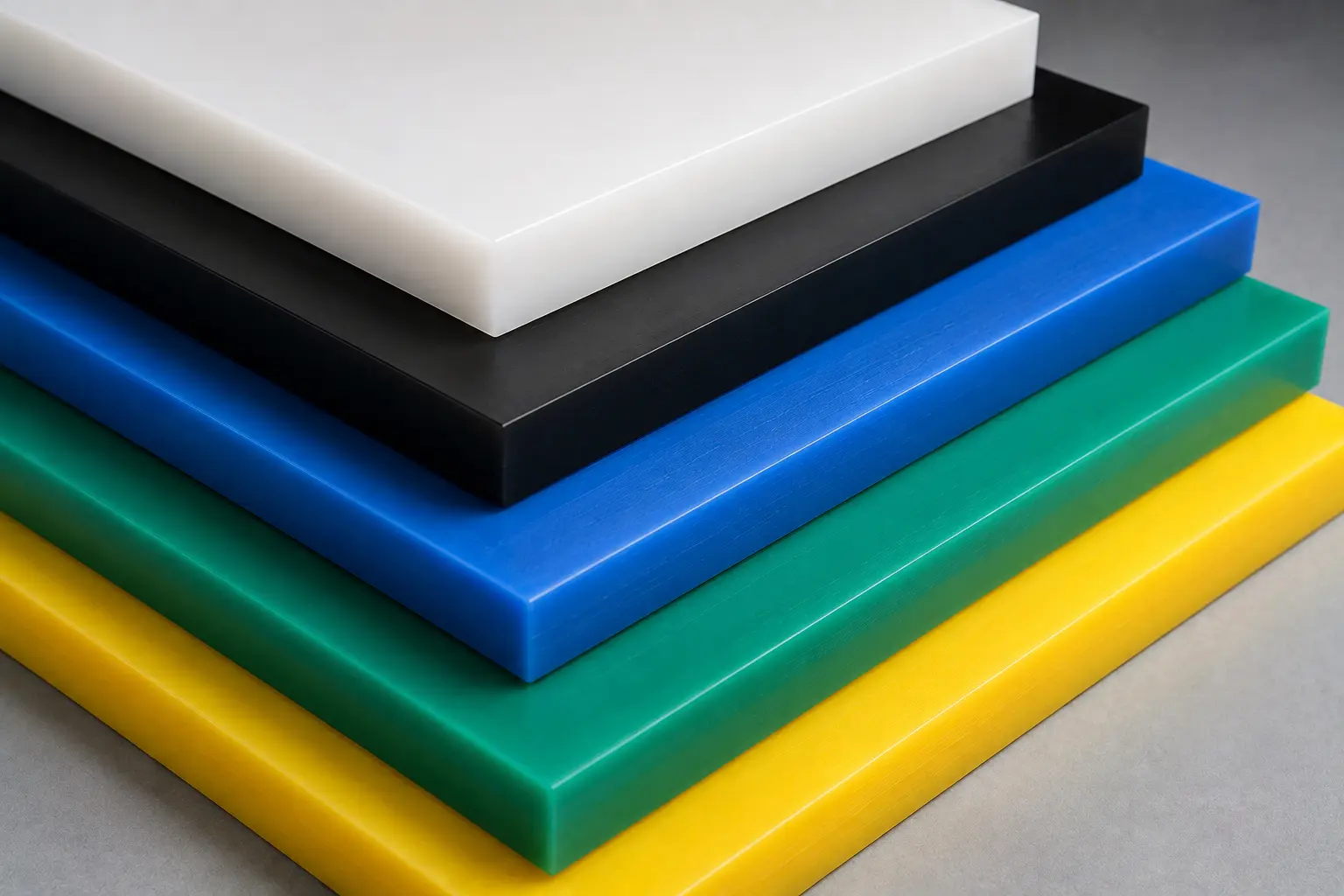
See shade sail structures and the tensile vs shade sail vs polycarbonate comparison.
The four architectural membranes, side by side
A general comparison of the four weatherproof families. HDPE shade mesh is left out because it is not a comparable product — it is not waterproof. Soft ratings are relative categories, not measured values.
| Property | PVC-polyester | PVDF-lacquered PVC | PTFE-glass | ETFE film |
|---|---|---|---|---|
| Family | Coated woven fabric | Coated woven fabric + finish | Coated woven fabric | Extruded film |
| Structural form | Tensioned membrane | Tensioned membrane | Tensioned membrane | Single-skin over net, or cushions |
| Base / substrate | Polyester scrim | Polyester scrim | Glass fibre | None |
| Coating / finish | PVC + acrylic lacquer | PVC + PVDF lacquer | Sintered PTFE | — (optional frit) |
| Transparency | Opaque | Opaque | Translucent, diffusing | Transparent to translucent |
| Light transmission | Low | Low | Moderate | High |
| UV resistance | Moderate–High | High | High | High |
| Weather resistance | High | High | High | High |
| Mechanical / tensile | High, by grade | High, by grade | High; brittle base | Low film strength — system carries load |
| Joining | HF / hot-wedge weld | Weld (lacquer removed at seams) | Heat-and-pressure weld | Thermal film weld |
| Surface character | Smooth, wide colour | Smooth, cleaner, colour-stable | Matte white, self-cleaning | Smooth, inert, self-cleaning |
| Fire reaction | Self-extinguishing B-class | Self-extinguishing B-class | Non-combustible A2-class | Self-extinguishing; melts & vents |
| Typical service life | Product-dependent | Longer than plain PVC | Long (often 25–30 yr+) | Long |
| Cleaning | Periodic washing | Largely rinses in rain | Self-cleans in rain | Self-cleans in rain |
| Maintenance | Moderate | Low–Moderate | Low | Low fabric; air supply to service |
| Fabrication complexity | Low | Low–Moderate | High | High (specialist) |
| Handling | Folded | Folded | Rolled — no folds | Rolled |
| Colour range | Very wide | Very wide | White / off-white | Clear / fritted / tinted |
| Typical project scale | Small–large | Small–large | Large / landmark | Medium–large daylit |
| Relative cost | Low | Low–Moderate | High | High (system) |
| Main advantage | Cost, colour, easy to fabricate | Cleaner & longer life for a small uplift | Non-combustible, long life, stays white | Transparency at almost no weight |
| Main limitation | Shorter life; plasticiser migration | Still B-class; no light gain | Cost, white only, no folds, lead time | Puncture-prone; needs net or air supply |
PVC-polyester
- Family
- Coated woven fabric
- Base
- Polyester scrim
- Coating / finish
- PVC + acrylic lacquer
- Light transmission
- Low
- UV resistance
- Moderate–High
- Joining
- HF / hot-wedge weld
- Fire reaction
- Self-extinguishing B-class
- Service life
- Product-dependent
- Fabrication
- Low complexity; folds
- Colour
- Very wide
- Relative cost
- Low
- Best for
- Everyday canopies & shades
PVDF-lacquered PVC
- Family
- Coated fabric + finish
- Base
- Polyester scrim
- Coating / finish
- PVC + PVDF lacquer
- Light transmission
- Low
- UV resistance
- High
- Joining
- Weld; lacquer removed at seams
- Fire reaction
- Self-extinguishing B-class
- Service life
- Longer than plain PVC
- Fabrication
- Low–Moderate; folds
- Colour
- Very wide, colour-stable
- Relative cost
- Low–Moderate
- Best for
- Permanent commercial & public work
PTFE-glass
- Family
- Coated woven fabric
- Base
- Glass fibre
- Coating / finish
- Sintered PTFE
- Light transmission
- Moderate, diffusing
- UV resistance
- High
- Joining
- Heat-and-pressure weld
- Fire reaction
- Non-combustible A2-class
- Service life
- Long (often 25–30 yr+)
- Fabrication
- High; rolled, no folds
- Colour
- White / off-white
- Relative cost
- High
- Best for
- Airports, stadiums, civic landmarks
ETFE film
- Family
- Extruded film
- Base
- None
- Coating / finish
- — (optional frit)
- Light transmission
- High
- UV resistance
- High
- Joining
- Thermal film weld
- Fire reaction
- Self-extinguishing; melts & vents
- Service life
- Long
- Fabrication
- High; specialist; rolled
- Colour
- Clear / fritted / tinted
- Relative cost
- High (system)
- Best for
- Daylight-critical atria & facades
How to read this: “Low / Moderate / High” are positions relative to the other three materials on this page, not laboratory figures. Anything marked “product-dependent” genuinely varies by grade, weight, coating formulation and manufacturer — take it from the datasheet of the fabric actually specified.
Which material to investigate first, by project type
A starting shortlist, not a rule. A specific brief — fire class, span, daylight, budget, climate — can move any of these.
| Application | PVC | PVDF | PTFE | ETFE | HDPE |
|---|---|---|---|---|---|
| Car parking shade | Excellent | Good | Not first choice | Not first choice | Conditional |
| Covered walkway | Excellent | Good | Conditional | Not first choice | Not first choice |
| Gazebo / conical shade | Excellent | Good | Conditional | Not first choice | Conditional |
| Large-span roof | Good | Good | Excellent | Good | Not first choice |
| Premium / landmark roof | Conditional | Good | Excellent | Excellent | Not first choice |
| Transparent / daylit roof | Not first choice | Not first choice | Conditional | Excellent | Not first choice |
| Retractable / folding roof | Excellent | Good | Not first choice | Conditional | Conditional |
| Commercial building roof | Good | Excellent | Good | Conditional | Not first choice |
| Sports facility / stand | Good | Good | Excellent | Good | Conditional |
| Swimming pool cover | Good | Excellent | Good | Good | Not first choice |
| Temporary / event structure | Excellent | Conditional | Not first choice | Not first choice | Good |
| Open shade, rain acceptable | Conditional | Not first choice | Not first choice | Not first choice | Excellent |
Application pages: car parking, walkways, gazebos, auditoriums & stadiums, swimming pools, outdoor structures, retractable roofs.
How the four materials compare on the things that wear a roof out
Filled bars are a relative position among these four materials on a four-step scale — not a percentage and not a lab result. More filled = better resistance, or (for light) more transmission.
UV & sunlight ageing
Heat & temperature stability
Rain / weather sealing (as a material)
Dust & pollution resistance
Self-cleaning in rain
Daylight transmission
Colour & appearance options
Low maintenance effort
How to arrive at the right membrane
Work through these in order. Each step narrows the field; by the end there is usually one family and a weight grade left to confirm.
Define the application
Car park, walkway, entrance, courtyard, stadium, atrium, facade. This alone rules several materials in or out.
Fix the span and geometry
Clear span, curvature, number of high and low points, edge type. Larger and flatter spans push toward stronger, stiffer grades — and sometimes toward PTFE or cushions.
Understand the climate and environment
UV and heat, rainfall intensity, humidity, coastal salt, dust and pollution, cold and snow. These set the finish, the colour and the detailing — see the climate section below.
Set the daylight / transparency requirement
Does the space below need natural light? A market or nursery does; a car park does not. This is often the single most decisive question — it separates ETFE and PTFE from PVC.
State the durability and performance expectation
Design life the client will fund; required fire reaction for the occupancy and escape routes; any acoustic or thermal target.
Consider the maintenance appetite
Who will clean and inspect it, and how often? A self-cleaning surface and a low-access design lower the lifetime burden.
Check the fabrication constraints
Does the geometry need a fabric that folds? Is the lead time tight? Is site access difficult? PTFE ships rolled and has a longer lead time; PVC folds and is quick.
Evaluate the aesthetics
Colour, gloss, translucency, the look of the surface by day and lit at night. PTFE is white; PVC/PVDF are any colour; ETFE is glass-like.
Set the budget — initial and lifetime
The membrane is usually a minority of the build cost. Weigh the initial premium against cleaning, repair and replacement over the design life.
Check the project specification and standards
Fire code, any client or authority spec, structural design codes, warranty requirements. The specified product must satisfy all of them — take the values from its datasheet.
The right membrane is selected by project requirements, not by price or material name alone. If two families still qualify at the end, the tie is usually broken by budget and colour (PVC vs PVDF) or by fire class and daylight (PTFE vs ETFE).
How climate changes the material decision
Environment does not usually change the family, but it changes the finish, the colour, the grade and the detailing — and the design values themselves come from the site survey and the applicable codes, not from a page like this.
Hot climate & high UV
Favour a fluoropolymer finish (PVDF or PTFE) for UV stability and a light colour to reflect solar heat. Check the space below for heat build-up and ventilate the form.
Heavy rainfall
Membrane choice matters less than geometry: steep falls, generous gutters, a designed overflow route and clean, tested seams. Any of the coated membranes seals; the roof system is what keeps the water out.
High humidity
Ventilate enclosed and domed forms so warm moist air escapes. All the coated membranes cope; detailing to avoid condensation traps is the point.
Coastal / salt exposure
Drives the steel and fitting specification far more than the fabric — galvanising plus coating, stainless cables and plates. A fluoropolymer surface also holds up better in salt haze.
Dust & pollution
Favour a self-cleaning surface — PTFE, or at least PVDF — and plan a rinse after the dusty season. A plain-lacquered PVC will grey noticeably on a polluted site.
Cold & snow
Changes the load case, not the material: a steep pitch so snow slides, the frame sized for the residual load, connections detailed against freeze-thaw. All the membranes remain flexible in cold.
There is no “best material for India” — a coastal Gujarat car park, a Delhi airport canopy and a Kashmir courtyard shade point to different answers. See the location pages for how local conditions are handled.
Light transmission and solar behaviour
A membrane roof is also a daylight filter and a solar screen. What it does with light is a design decision, not a by-product.
Opaque
PVC and PVDF in solid colours, and darker translucent grades. The space below is lit artificially or from the sides. Right for car parks, back-of-house and anywhere glare must be controlled.
Translucent
White PVC/PVDF grades and PTFE-glass. Light passes through diffused — soft, shadow-free, no hot spots. A lit interior feels bright without direct sun. This is the usual choice for markets, concourses and sports halls.
Transparent
Clear ETFE. You see the sky through it. Near-glass daylight and solar gain, so shading — printed fritting, tinting, or a movable middle layer in a cushion — is designed in from the start.
Daylight, glare and night appearance
A translucent roof cuts lighting energy and gives an even, comfortable light with no glare — the diffusion is the benefit. At night the same translucency makes the roof glow when the interior is lit, which is often used deliberately as an architectural signature. A transparent roof needs a daylighting and glare study; a translucent one rarely does.
Solar gain and colour
Colour drives how much solar heat the surface absorbs: a white or light membrane reflects most of it, a dark one absorbs and re-radiates it downward. Actual thermal performance, though, depends on the whole assembly — single or double skin, the air gap, ventilation, the volume below — not on the fabric alone. A membrane roof is not a substitute for an insulated envelope where one is needed.
Fire, acoustics and waterproofing
Three areas where a common assumption is wrong, and where the answer is always project-specific.
Fire
Fire behaviour varies by material and by product. As a guide: PTFE-coated glass is non-combustible (typically A2-class under EN 13501-1); PVC, PVDF and ETFE are self-extinguishing B-class — flame-retardant, not non-combustible. ETFE melts and vents rather than dripping flame. The required class is set by the occupancy, the escape routes and the local code, and must be checked against the certification for the exact product specified. Do not assume all PVC or all PTFE systems behave identically.
Acoustics
A single taut membrane is a hard, reflective surface — it does not absorb sound the way a lined ceiling does, and a large curved membrane can focus reflections. Reverberation under a membrane roof can be lively. Double-layer systems, an acoustic liner, or perforated inner membranes with an absorbent backing are used where it matters. For an auditorium, a concourse or any space with a speech or music requirement, acoustic performance needs project-specific analysis — it is not a property you read off a fabric datasheet. See auditorium & stadium roofs.
Waterproofing & drainage
The membrane material being water-resistant is necessary but not sufficient. A watertight roof is the complete designed system: welded seams tested for continuity, sealed and clamped edges, correct falls so water always runs off, valley and eaves gutters sized for the rainfall, flashings at every interface, and drained low points with a designed overflow. A ponding low spot will find any weakness. Geometry and detailing keep a membrane roof dry — the fabric is one part of it.
How the membrane is engineered and fabricated
The material cannot be discussed apart from the geometry. The 3D surface is generated first, then turned into flat panels, then cut, welded and reinforced — and the method changes with the material.
Form-finding
The equilibrium shape is generated for the given supports, edges and pre-stress. It defines an anticlastic surface that carries both downward load and uplift and drains to its low points. The membrane grade is chosen against the resulting forces. See form-finding.
Patterning
The doubly-curved 3D surface is developed into flat panels — a surface with double curvature cannot be flattened without distortion, so it is split into narrow strips that each flatten with acceptable error. Panel width is limited by the fabric roll width.
Compensation
Each flat panel is cut slightly smaller than its geometric size, because the fabric will stretch to shape when it is tensioned. The compensation values come from biaxial tests on the specific fabric — warp and weft stretch differently.
CNC cutting
Panels are plotted and cut on a CNC table, each marked with its panel number, orientation and seam allowances. Orientation matters — the warp direction is aligned consistently across the roof.
Seaming / welding
PVC / PVDF: high-frequency or hot-wedge welding; PVDF lacquer removed along the seam first. PTFE-glass: heat-and-pressure welding, slower, skilled. ETFE: thermal film welding. HDPE mesh: sewn or clamped, not welded. A correct weld is as strong as the parent material.
Edge & corner reinforcement
A keder rope or a webbing belt is welded into the perimeter hem to transfer the edge force into the boundary cable or the clamped edge. Corner plates, extra fabric plies and steel fittings build up where several forces meet.
Quality inspection
Weld strength on samples, dimensions against the patterning, hardware and hems against the drawings. Defects are corrected before the panel leaves the shop.
Packing & transport
PVC and PVDF are folded — compact, low transport cost. PTFE-glass and ETFE are rolled on wide cores to avoid creasing the brittle base or the film. Each pack is labelled with its installation sequence.
On site the frame is erected, the panels are drawn out and connected to the edge cables and fittings, and the membrane is brought up to its engineered pre-stress in a controlled sequence — the step that turns a slack sheet into a stiff structural surface. Full sequence in the construction process.
The finish is where most of the performance difference lives
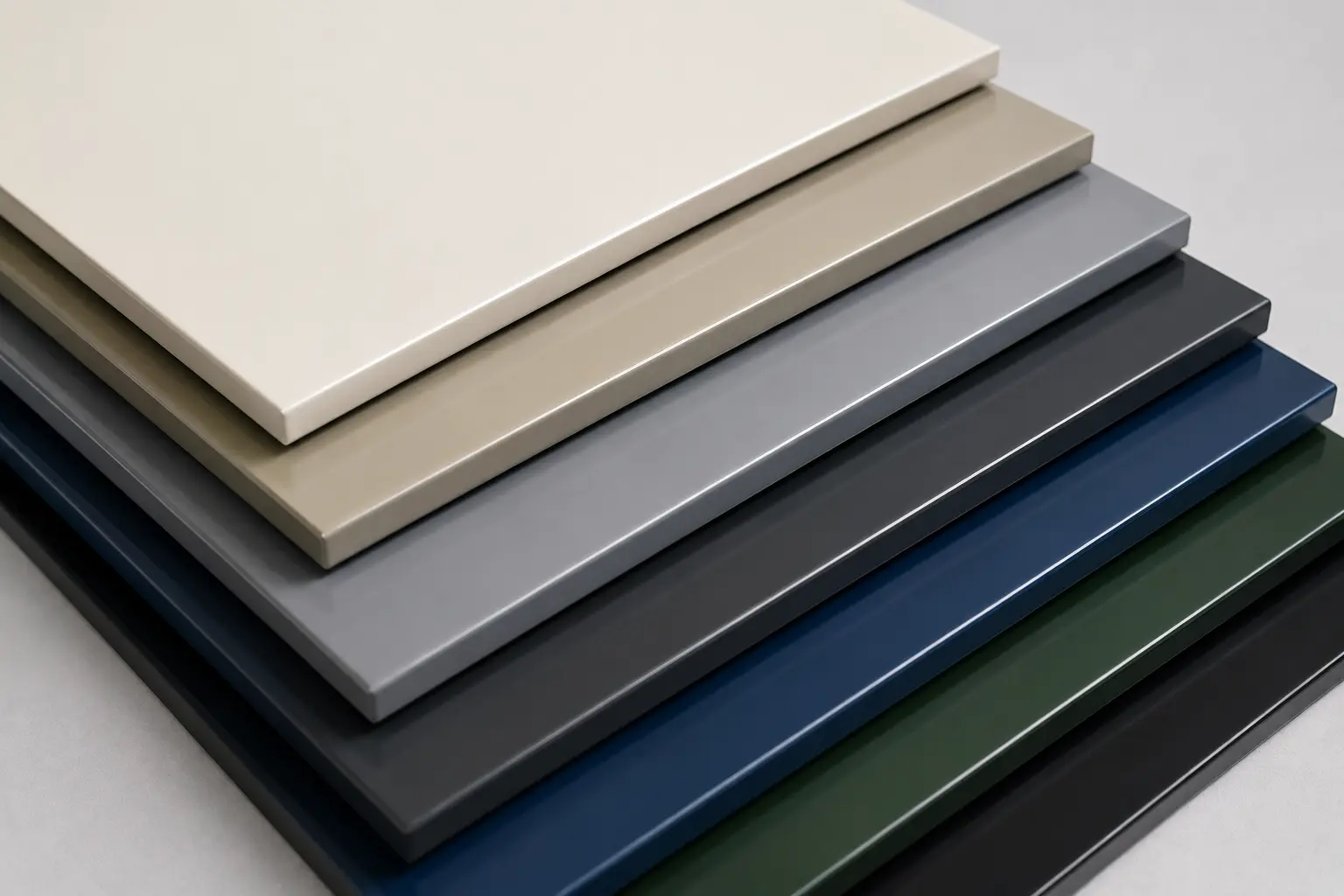
Why coatings and finishes exist
The base cloth carries the load but is not weatherproof, not UV-stable and not cleanable on its own. The coating (PVC or PTFE) seals it and protects the yarn. The top finish — acrylic, PVDF, or the PTFE itself — is the sacrificial outer layer that takes the UV, the pollution and the cleaning, and it is the single biggest lever on how the roof looks in ten years.
Colour is not only aesthetic
A light or white membrane reflects most incident solar radiation and keeps the space below cooler; a dark one absorbs it. Dirt shows badly on a mid-grey and a pale beige, and hardly at all on a darker colour or a self-cleaning white — which changes how often it needs washing. Colour also fades: a plain-lacquered PVC in a strong colour will shift over years, a PVDF-finished one far less, and PTFE has no colour to lose.
Surface options
Matte reads as architectural and hides minor marks; gloss looks crisp and sheds water fast but shows every ripple; textured PVC is available for a softer look. Printed patterns — graphics on PVC, fritting on ETFE — are applied for branding or for solar control. Translucent and transparent are finish-and-grade choices, covered in the light section above.
Durability, maintenance and repair
Service life is not a property of the material alone — it is the result of the material, the design, the installation and how the roof is looked after.
What actually drives service life
The membrane and its coating; the top finish; UV and heat exposure; pollution and humidity; the pre-stress level and how evenly it is applied; the quality of the seams and edge details; the installation; the drainage (standing water shortens life); and the cleaning and inspection regime. Two identical fabrics on two roofs can have very different lifespans. This is why any lifespan figure should be attached to a specific product, a specification and an exposure — a bare number is not useful.
Maintenance checklist
- Membrane surface — wash periodically with water and a soft brush or low-pressure spray; rinse after the dusty season; no solvents or abrasives.
- Seams — inspect welds for any lifting, peeling or discolouration, especially at panel ends and corners.
- Edge details — check keder ropes, webbing belts, clamped edges and their fixings for movement or wear.
- Cables & fittings — check tension, corrosion, and the end terminations; look for birdcaging or broken wires.
- Corner plates & hardware — check bolts, plates and shackles for corrosion and loosening.
- Pre-stress — a first re-tensioning after the initial season; then check for slackness or flutter on a regular cycle.
- Drainage — clear gutters, outlets and overflow routes before the monsoon; check that falls still run water off.
- Steel frame — inspect the galvanising and paint, especially at connections and where water sits.
- Damage — log any punctures, tears, abrasion or impact marks and assess whether they need a patch now.
- ETFE cushions — check the air-supply unit, pressure, filters and the inflation of every panel.
Repair or replace
Often repairable
A small puncture or tear, a lifted seam end, local abrasion, an ETFE film puncture — patched by welding a matching piece over the sound surrounding fabric. Cables, fittings and hardware are replaced individually. Repairs work when the base and coating around the damage are still in good condition.
Points to replacement
Widespread coating loss or chalking, a base fabric that has lost strength, brittle or cracking PTFE, repeated failures in the same area, or a membrane at the end of its design life. Repeatedly patching a worn-out membrane costs more over time than a planned replacement panel or roof.
What the material costs, and what the project costs
The membrane is one line in a tensile-structure quote — usually a minority of the total, which is dominated by the steel and the installation. There is no fixed price per square foot; too many factors move it.
Cost drivers — membrane
Cost drivers — the whole tensile structure
Lowest initial cost
Plain-lacquered PVC, a light grade, a simple colour. The right answer for a genuinely short-life or budget-led structure, or where the fabric is a small part of the job.
Lowest total cost
Often a PVDF finish or a heavier grade — a small premium that buys years of extra life, less cleaning and a later replacement. On a permanent structure the lifetime sum usually favours the better fabric.
Lowest initial cost ≠ lowest total project cost. Over a design life the ownership figure is: initial fabric + installation + periodic cleaning + inspection + occasional repair + eventual replacement. A membrane that costs a little more but self-cleans, holds colour and lasts ten years longer can be cheaper across that whole period. This is the calculation professional decision-makers should run — not a comparison of first prices.
How to read a membrane datasheet
Material specification should be based on the manufacturer’s datasheet for the exact product, the test method behind each figure, and the project’s own fire, structural and exposure requirements — not on a generic table.
Every real technical property should carry four things: the value, its unit, the test method it was measured by, and the product it belongs to. Without the test method, two “tensile strength” numbers are not comparable. Without the product name, a value is just an average.
| Property | Value | Unit | Test method | Source |
|---|---|---|---|---|
| Tensile strength (warp / weft) | from datasheet | N / 5 cm | e.g. EN ISO 1421 | Named product |
| Tear strength | from datasheet | N | e.g. DIN 53363 | Named product |
| Weight | from datasheet | g/m² | EN ISO 2286-2 | Named product |
| Fire reaction | class | — | EN 13501-1 / NFPA 701 / DIN 4102 | Test certificate |
| Light transmission | from datasheet | % | manufacturer method | Named product / colour |
| Adhesion / peel | from datasheet | N / 5 cm | EN ISO 2411 | Named product |
Do not merge datasheets. A property from one manufacturer’s Type III PVC does not transfer to another maker’s Type III. A figure is typical (a class average), product-specific (one datasheet), or project-specific (after the site and loads are assessed) — and those are not interchangeable. Ekra Decor specifies the fabric with the quote and supplies the datasheet and certificates for the product used.
Membranes on completed Ekra Decor structures
Real projects, grouped by the kind of application. Where the exact membrane grade is not part of the public record, it is described by family rather than named.
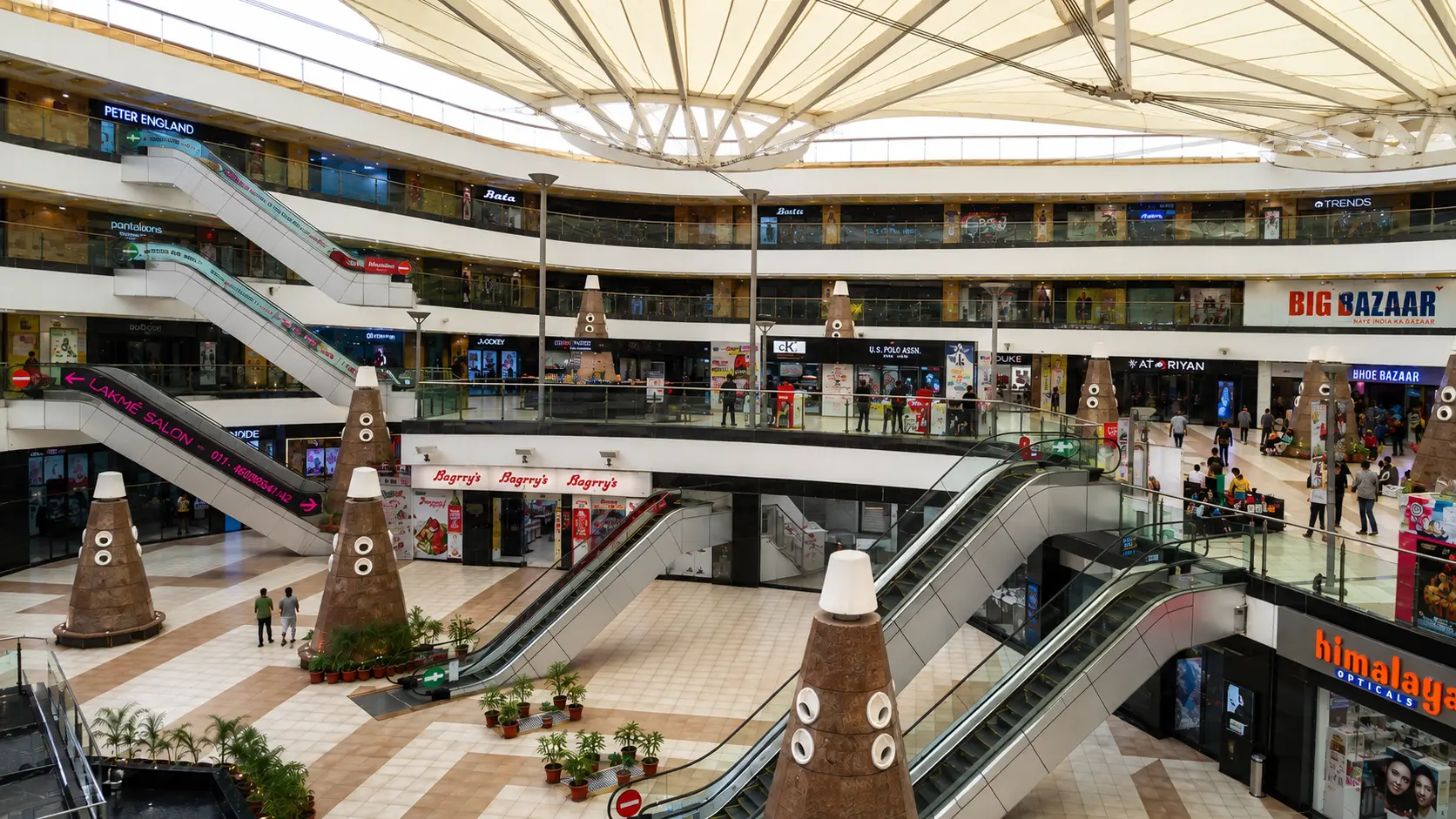 Retail court roof · Coated woven membraneVasant Square MallVasant Kunj, New Delhi
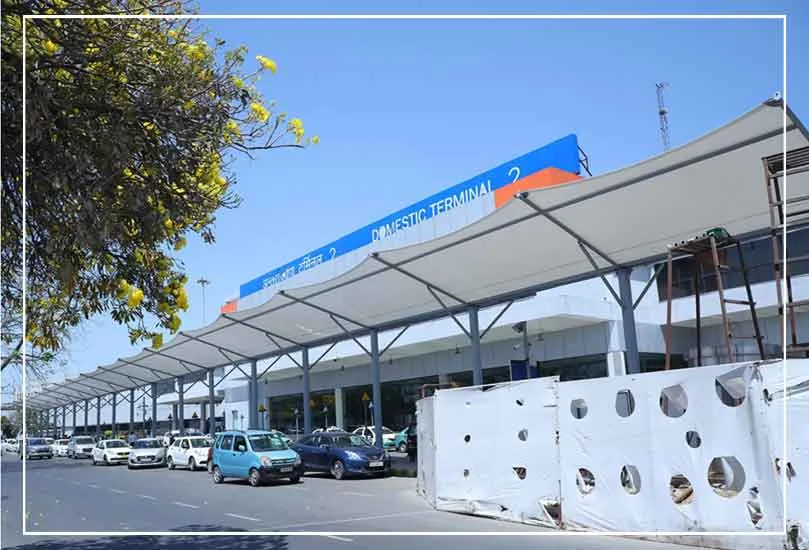 Transit canopy · Coated woven membraneIGI Airport, Terminal 2New Delhi
Atrium skylight · Translucent membraneGuwahati SkylightsGuwahati, Assam
Car parking · Coated woven membraneManesar Car ParkingManesar, Haryana
Transit canopy · Coated woven membraneIGI Airport, Terminal 2New Delhi
Atrium skylight · Translucent membraneGuwahati SkylightsGuwahati, Assam
Car parking · Coated woven membraneManesar Car ParkingManesar, Haryana
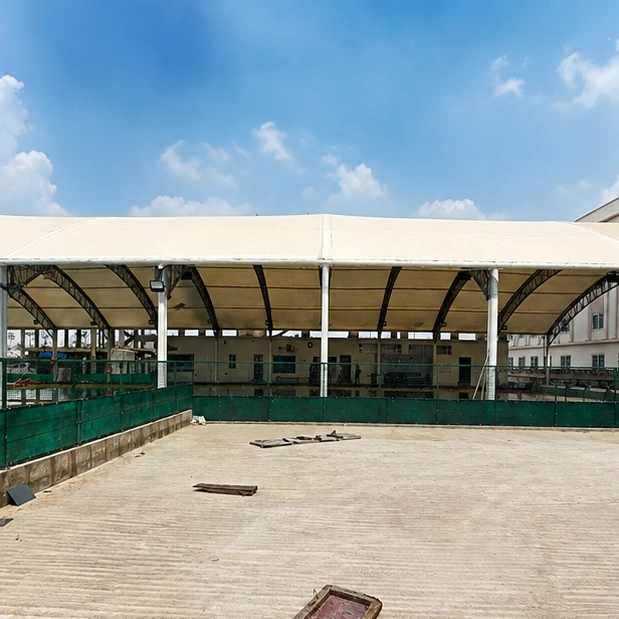 Swimming pool · Coated woven membraneChampions Aquatics AcademyBahadurgarh, Haryana
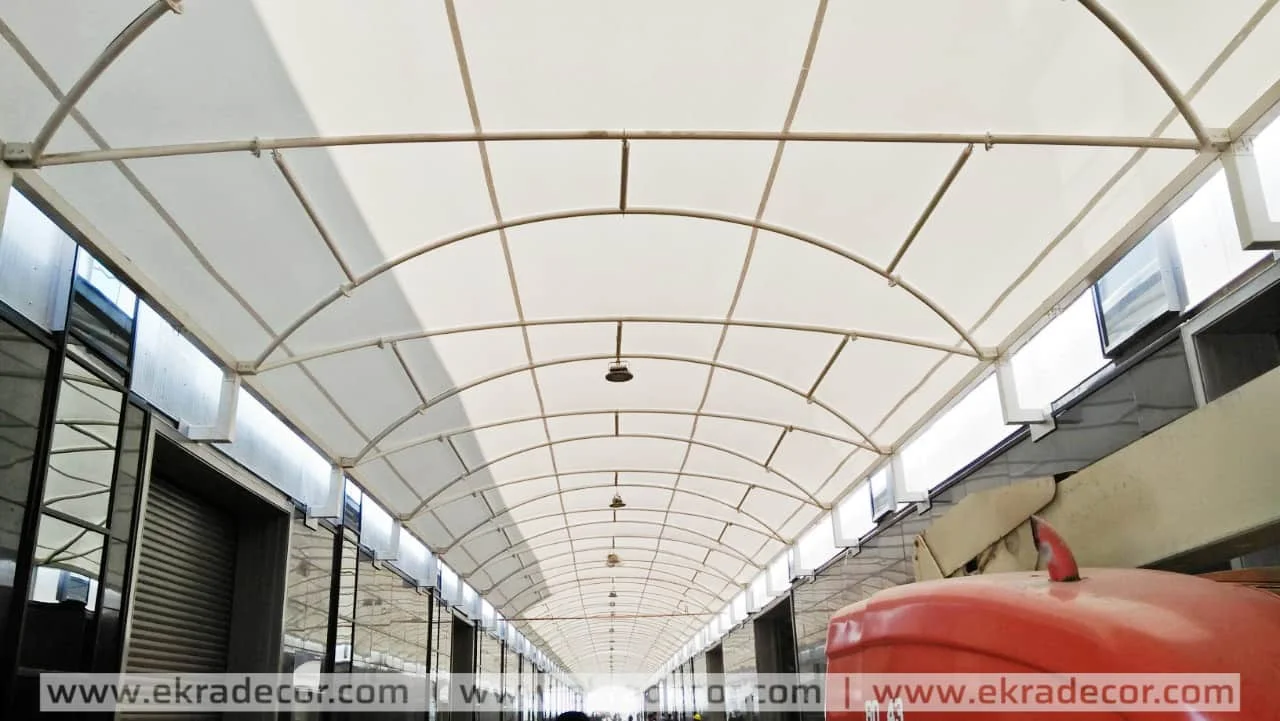 Industrial roof · Coated woven membraneDesai ConstructionValsad, Gujarat
Membrane materials — FAQ
Technical questions people ask when choosing a tensile fabric. Answers are kept responsible — where a number depends on the product, it is described that way.
It is a thin, high-strength surface material — usually a woven base cloth sealed in a polymer coating, or an extruded polymer film — that carries load only in tension. Held in a doubly-curved, pre-stressed shape by steel and cables, it behaves as a structural roof rather than a loose sheet.
PVDF is not a separate fabric — it is a thin PVDF (fluoropolymer) top lacquer over the PVC coating on the same polyester base. It keeps the surface cleaner and more UV-stable, which typically extends the service life over a plain-lacquered PVC for a modest cost uplift. See PVDF fabric.
PVC and PVDF have a polyester base and a PVC coating; PTFE has a glass-fibre base and a PTFE coating. PTFE is non-combustible where PVC/PVDF are self-extinguishing; it lasts longer and self-cleans better; but it costs more, comes in white only, is stiffer, cannot take sharp folds and has a longer lead time.
No. ETFE is a film — a thin extruded sheet with no woven base and no coating layers. It should not be compared one-to-one with woven fabric on every property; its strengths (transparency, weight) and its constraints (needs a support net or an air supply, low puncture resistance) are different in kind. See ETFE fabric.
PVC-coated polyester is the usual choice — the fabric is a minority of the cost, light transmission is not wanted, and the weather duty is well within its range. A PVDF finish is worth the small uplift where the canopy is permanent or the site is dusty. See car parking tensile shades.
It depends on the fire class, the light requirement and the budget. PTFE-coated fibreglass is common for large airport, stadium and civic spans because it is non-combustible, long-life and stays white. PVDF-lacquered PVC covers many large commercial spans at lower cost. ETFE cushions suit large daylit roofs where weight and transparency lead.
Clear ETFE film transmits the most — up to roughly 90–95% of visible light. PTFE-coated glass passes about 7–15%, diffused evenly, and brightens as it self-cleans. PVC and PVDF are lower, roughly a single-digit to mid-teens percentage by grade and colour. Exact values are product-specific.
The coated membranes (PVC, PVDF, PTFE) and ETFE are water-resistant as materials. A watertight roof is the whole system — welded seams, sealed edges, correct falls, gutters, flashings and drained low points. HDPE shade mesh is breathable and is not waterproof.
PTFE-coated glass fibre is — typically an EN 13501-1 A2 reaction. PVC, PVDF and ETFE are self-extinguishing B-class (flame-retardant, not non-combustible); ETFE melts and vents. The required class is set by the occupancy and the local fire code, and must be checked against the certificate for the exact product.
The engineered 3D surface is flattened into narrow panels with stretch compensation, the panels are CNC-cut, welded together, and edge ropes, webbing belts and corner plates are built into the hems. The membrane is inspected against the drawings, marked, folded or rolled, and shipped. See the fabrication section above.
There is no universal figure. Service life depends on the product grade, the coating and finish, the climate and pollution exposure, the pre-stress and detailing, the installation, and the cleaning regime. Any lifespan number should be tied to a specific product, specification and exposure — a bare number is not meaningful. See how long tensile structures last for typical design lives by material and the upkeep that protects them.
Periodic gentle washing with water and a soft brush or low-pressure spray, and a rinse after the dusty season; PTFE and ETFE need less. Minor damage — a puncture, a small tear, a lifted seam — is often patched by welding a matching piece over sound fabric. Widespread coating loss or a degraded base points to replacement rather than repeated patching.
The material family, grade and weight, the coating and finish, the covered area, the span, the number of seams, the edge and corner reinforcement, the colour and the warranty term. But the membrane is usually a minority of a tensile-structure cost — the steel and the installation dominate. PVC→PVDF is a small uplift; PTFE and ETFE are a step change. See what determines the fabric price and the cost guide.
By project requirements, not by price or name. Define the application and geometry, the span, the climate, the daylight requirement, the durability and fire expectations, the maintenance appetite, the fabrication constraints, the aesthetics and the budget — then match a family and grade. Climate changes the finish, colour and detailing rather than the family; the design values come from the site survey and the applicable codes.
Still have a question? Send your project brief or see the tensile structure guide.
Tell us the brief — we specify the fabric
Design life, fire class, light requirement, budget and span. You get a membrane family and grade, a fabric datasheet, and an itemised quote.
Let’s Build Your Structure
Speak directly with our structural engineering team to discuss your project dimensions, material options, or to schedule a free on-site technical inspection across India.
Direct Phone & WhatsApp Hotlines
+91 98102 37952 (Delhi HQ) / +91 93159 45187 (Bangalore) / +91 82879 92289 (Engineering)
Official Email Address
Delhi Factory & Administrative HQ
No. 367 Badam Singh Market, Rangpuri, Near Shiv Murti, NH-8, New Delhi 110037
Bangalore Regional Office
93/5, Kada Agrahara Village, Dodda Gubbi Post, Bangalore, Karnataka - 560077, India
Chattarpur Office
House No. 488, 3rd Floor, Khasra No. 60, 100 Futa Road, Opposite Delhi Jal Board, Near Diwan Bajaj Showroom, Chattarpur Pahari, New Delhi - 110074, India
Request Itemized Price Quote
Fill in your requirements below for an instant engineering assessment & 3D estimate.