

Polycarbonate Roofing Structures
Polycarbonate is a rigid, near-unbreakable plastic sheet — a cheap way to cover a small span with some daylight, with real drawbacks that get worse as the structure grows. Where it works, where it doesn't, and where a tensioned fabric roof is the better answer.
- Rigid sheet — solid or multiwall
- Cheap for a small span; drawbacks scale up
- Yellows and turns brittle over 10–15 years
- Fabric is better for any large or column-free span
Engineering Trusted by India’s Leading Names
28+ years delivering tensile structures for corporate campuses, industrial groups, and institutional developments — built with fabric technology from the world’s leading membrane manufacturers.
 TATA Motors
 L&T
L&T
 Reliance
 Adani
Adani
 Mahindra
 Godrej
 DLF
DLF
 ITC Ltd
 Maruti Suzuki
 GMR Group
 JSW Steel
 Prestige Group
 Sobha
Sobha
 Siemens
 Tata Chemicals
 Tata Tele Business Services
 Power Grid Corporation
 Emaar MGF
 National Law University Delhi
 UPES Dehradun
 Vasant Valley School
 Aditya Birla Group
 Amity University
 Vikram Solar
 Tractors India
 Mazda Colours
 Millennium Structurals
 Sehwag International School
 BSBK Pvt. Ltd.
 17 Miles Hotel
 Rich Harvest School
 The Imperial New Delhi
 Moore Constructions
 Mehra Construction
 Ramprastha
 Minda NexGenTech (UNO Minda)
 Yashmay Public School
 Gyan Mandir Foundation
 Omega Developers
 SPEC
SPEC
 Serge Ferrari
 Mehler
 Heytex
 Versaid
 PATI
PATI
Polycarbonate roofing: where it works and where it doesn’t
Polycarbonate is a rigid, near-unbreakable plastic sheet — a cheap way to cover a small span with some daylight. It has real drawbacks that get worse as the structure gets bigger.
Solid or multiwall
Solid sheet is clear and strong but heavier and conducts heat. Multiwall (twin- or triple-wall) is lighter, insulates better, diffuses the light, and is what is normally used for roofs.
Properties
- Light — 30 to 90 percent transmission, depending on tint and wall count.
- Impact — roughly 200 times the impact resistance of glass; it does not shatter.
- UV — a co-extruded UV layer on the weather face, which must face the right way up.
The drawbacks
It yellows and turns brittle over 10 to 15 years. It is very loud under rain and hail. It expands and contracts a lot, so fixings have to allow movement and the gaskets fail over time. Span is limited by the sheet and the purlin spacing.
Where it works — and where fabric is better
Polycarbonate suits a lean-to, a balcony or small terrace cover, a short covered walkway or a greenhouse. For any large or column-free span, a roof that is part of the architecture, or a quiet long-life roof, a tensile fabric roof is the better answer — see the full comparison. Tell us the span.
Polycarbonate vs a tensioned fabric roof
Polycarbonate and a tensioned fabric roof solve different problems. The comparison, honestly:
| Property | Polycarbonate (multiwall) | PVC / PVDF membrane | PTFE-glass membrane |
|---|---|---|---|
| Weight | Low | Very low | Very low |
| Economical span | Small | Large (30 m+) | Very large |
| Daylight | High (30–90%), can glare | Diffuse, 5–15% | Diffuse, 10–20% |
| Solar heat | Significant gain | Mostly reflected | Mostly reflected |
| Noise under rain | Loud | Quiet | Quiet |
| Service life | 10–15 yr, yellows | 15–25 yr | 25–30+ yr |
| Design freedom | Flat / simple curves only | Free-form, sculptural | Free-form |
| Best for | Lean-tos, terraces, small walkways | Canopies, courts, car parks, courtyards | Airports, stadiums, civic landmarks |
Polycarbonate (multiwall)
- Weight
- Low
- Economical span
- Small
- Daylight
- High (30–90%), can glare
- Solar heat
- Significant gain
- Noise under rain
- Loud
- Service life
- 10–15 yr, yellows
- Design freedom
- Flat / simple curves only
- Best for
- Lean-tos, terraces, small walkways
PVC / PVDF membrane
- Weight
- Very low
- Economical span
- Large (30 m+)
- Daylight
- Diffuse, 5–15%
- Solar heat
- Mostly reflected
- Noise under rain
- Quiet
- Service life
- 15–25 yr
- Design freedom
- Free-form, sculptural
- Best for
- Canopies, courts, car parks, courtyards
PTFE-glass membrane
- Weight
- Very low
- Economical span
- Very large
- Daylight
- Diffuse, 10–20%
- Solar heat
- Mostly reflected
- Noise under rain
- Quiet
- Service life
- 25–30+ yr
- Design freedom
- Free-form
- Best for
- Airports, stadiums, civic landmarks
For a full three-way comparison including shade sails, see tensile vs shade sail vs polycarbonate.
Where polycarbonate is the right choice
Polycarbonate suits a small, simple, sheltered span where the budget is tight.
Lean-to over a door or window
A short rigid sheet on brackets — cheap, quick, adequate for a small area.
Balcony or small terrace cover
A flat or single-curved sheet on a light frame.
Short covered walkway
A few metres of link between two doors, where span and noise are not an issue.
Greenhouse or nursery
Twin-wall sheet for its light diffusion and cheap insulation.
For anything larger, longer or column-free, see tensile canopy structures and walkway tensile structures.
What polycarbonate does not do well
The drawbacks are real and they get worse as the structure gets bigger.
- Ages badly — it yellows and turns brittle over roughly 10–15 years, faster in intense UV.
- Loud — very noisy under rain and hail; unpleasant over a seating or waiting area.
- Moves a lot — large thermal expansion, so fixings have to allow movement and the gaskets fail over time, letting water in.
- Limited span — the sheet and the purlin spacing cap how far it can go; large areas need a lot of supporting structure.
- Solar heat gain — a clear sheet lets the sun’s heat straight through; the space under it gets hot.
- No design freedom — flat or simple single curves only; nothing sculptural.
What the fabric contributes to the cost
The membrane is one line in a tensile-structure quote — usually a minority of the total, which is dominated by the steel and the installation. What moves the fabric cost:
Polycarbonate is cheap for a small span. Once the area or the span grows, the supporting structure and the shorter life close the gap with a fabric roof. See the cost guide.
Fabric alternatives we’ve built
Each project is documented with site photographs and recorded scope.
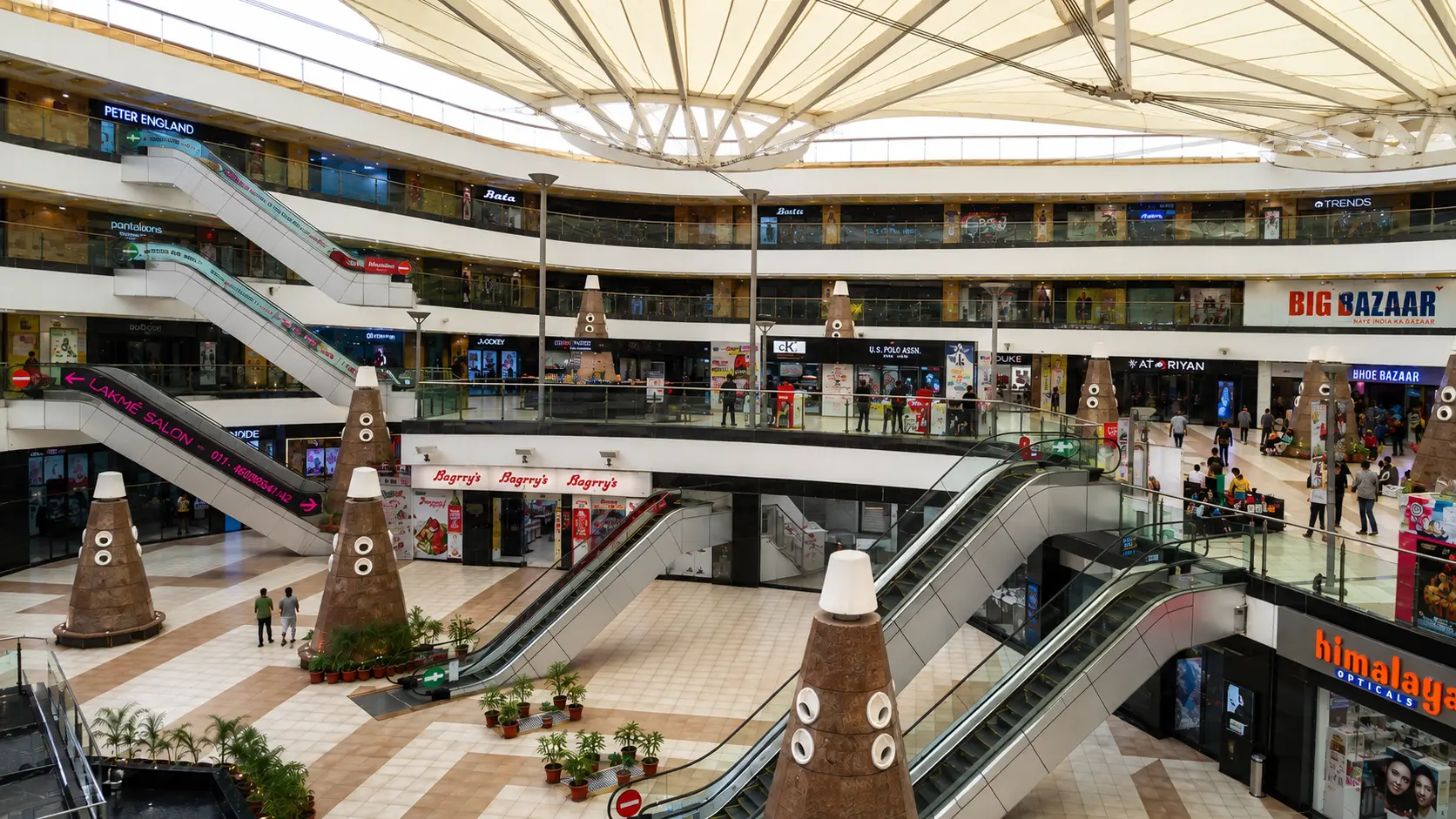 Retail · Courtyard roofVasant Square MallVasant Kunj, New Delhi
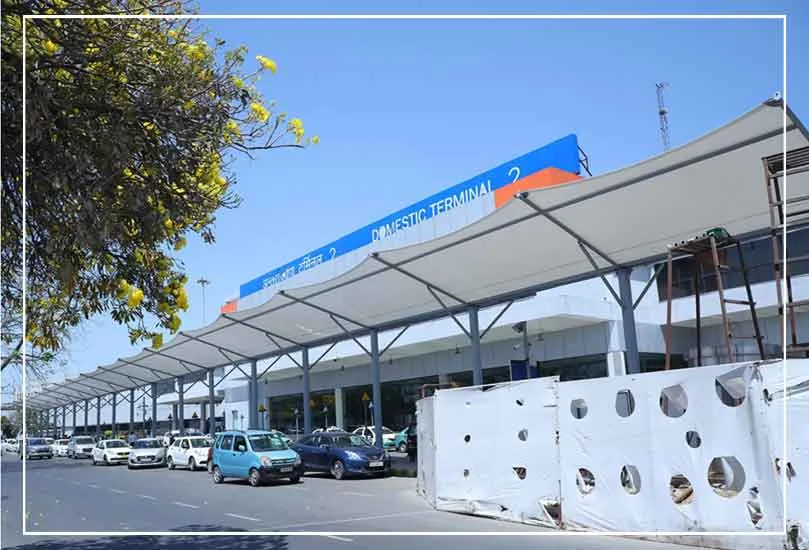 Transit · Walkway canopyIGI Airport, Terminal 2New Delhi
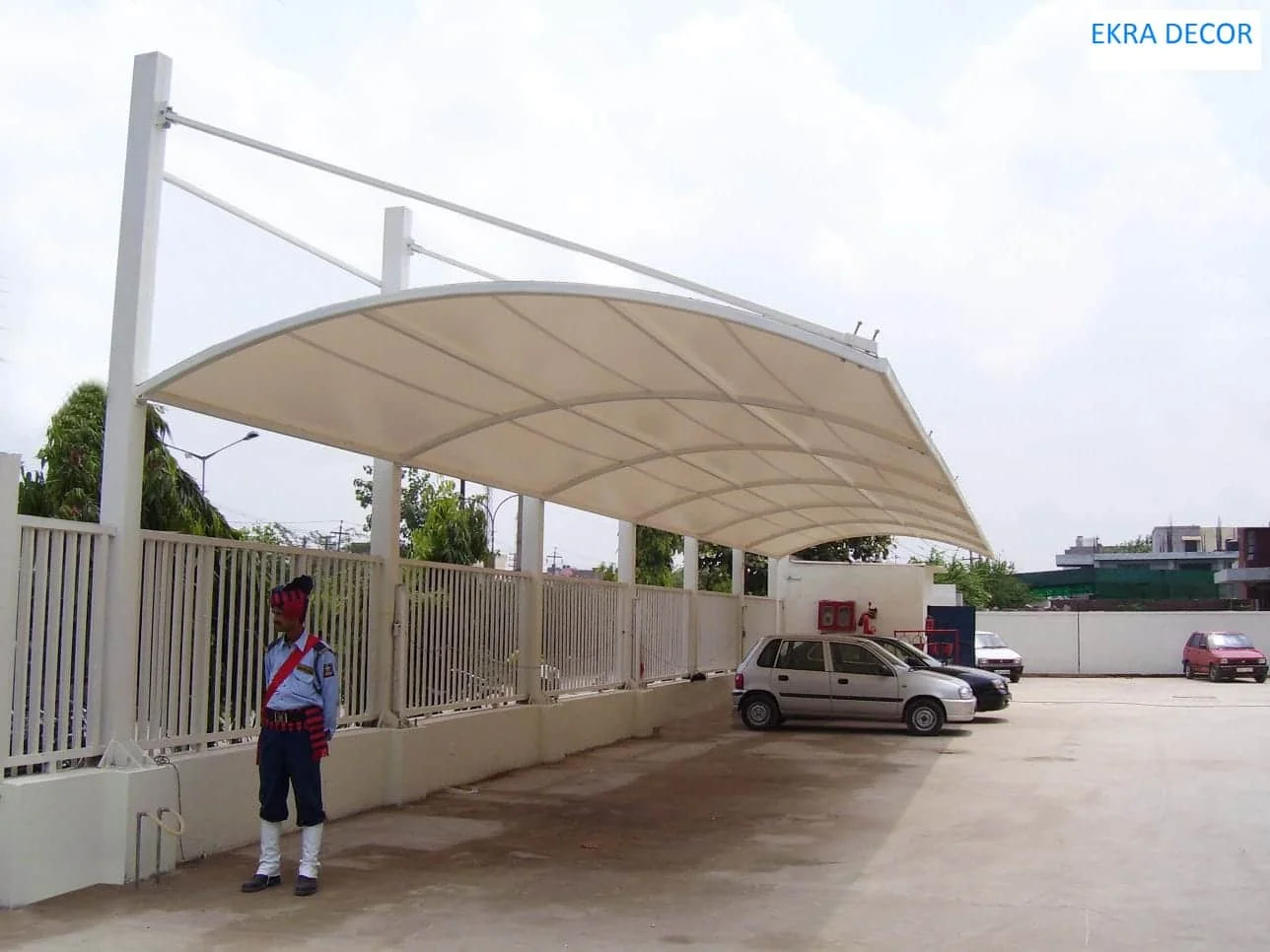
Industrial · Cantilever canopyManesar Car ParkingManesar, Haryana
Transit · Walkway canopyIGI Airport, Terminal 2New Delhi
Industrial · Cantilever canopyManesar Car ParkingManesar, Haryana
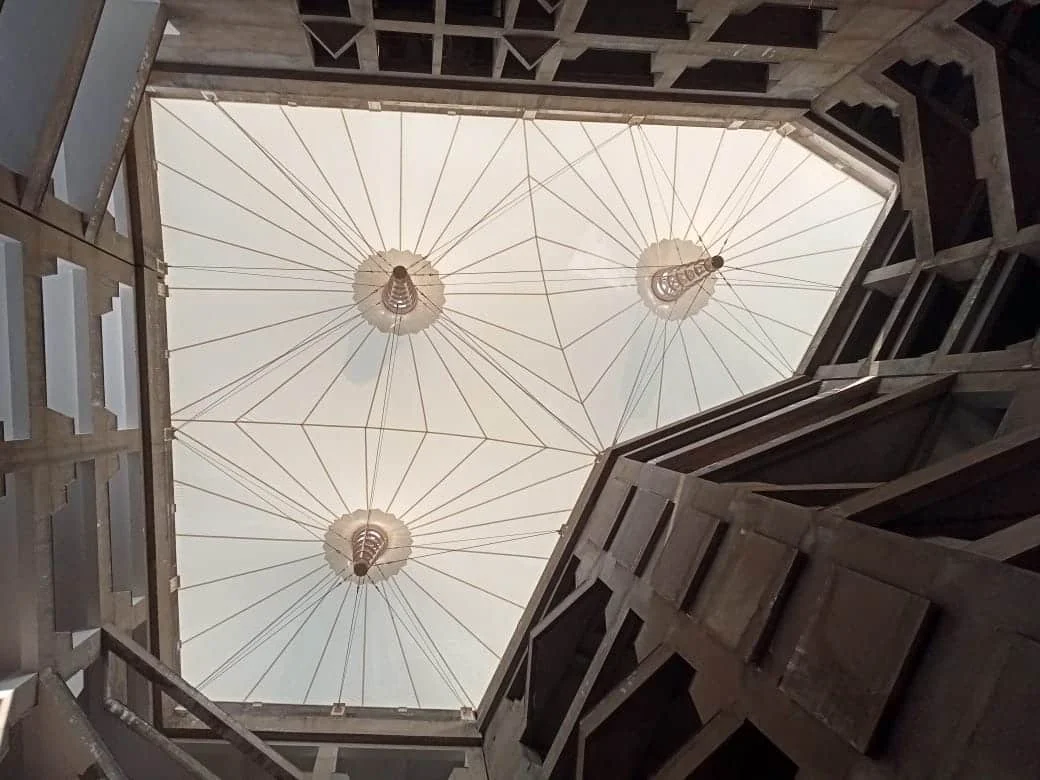 Public · Atrium skylightsGuwahati Tensile StructureGuwahati, Assam
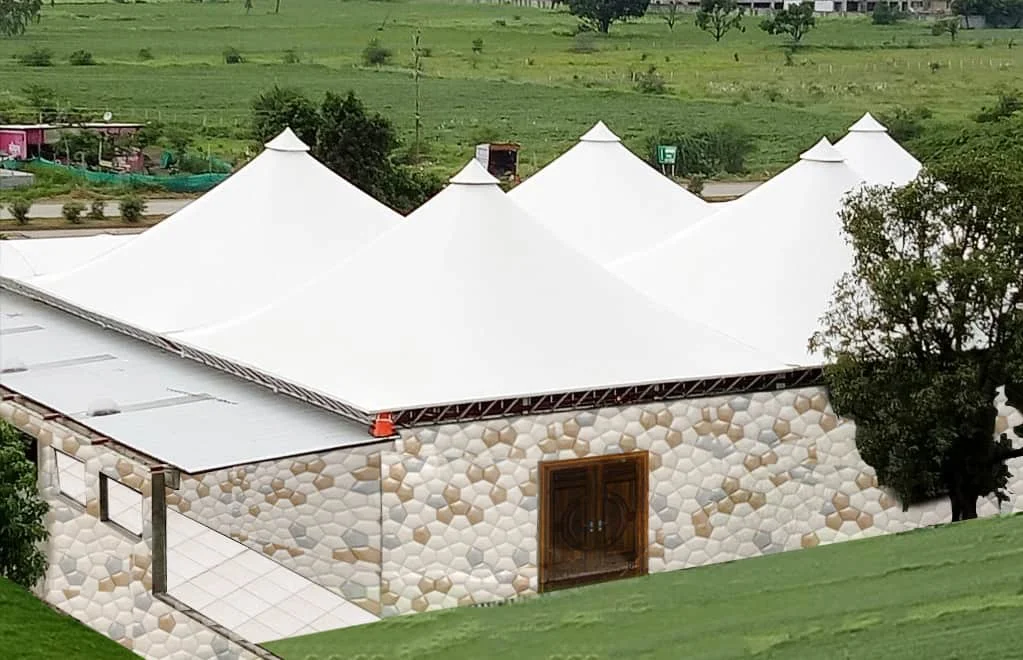 Hospitality · Conical structureBanquet HallIndore, MP
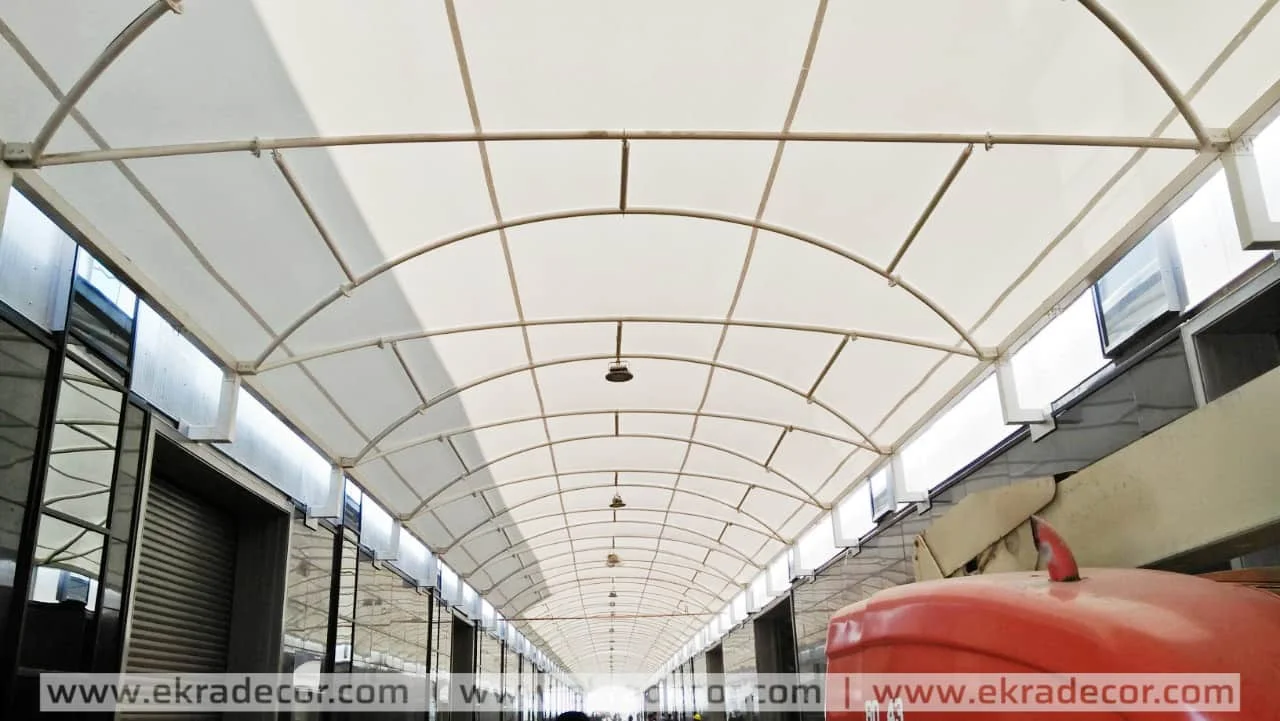 Industrial · Single-span roofDesai ConstructionValsad, Gujarat
Polycarbonate roofing structures FAQ
The questions people ask when comparing polycarbonate with a fabric roof.
For a small, simple, sheltered span on a tight budget — a lean-to, a balcony cover, a short walkway — yes. For anything large, long or column-free, a tensioned fabric roof is better.
Roughly 10–15 years before it yellows and turns brittle, faster in intense UV. The gaskets around the fixings usually fail sooner and let water in.
Multiwall (twin- or triple-wall) is what is normally used for roofs — lighter, better insulating, and it diffuses the light. Solid sheet is clearer and stronger but heavier and conducts heat.
Yes — very. It is unpleasant over a seating, waiting or dining area. A tensioned fabric roof is quiet by comparison.
It expands and contracts a lot with temperature, so the fixings must allow movement, and the rubber gaskets around them harden and fail over the years, letting water past.
For any large or column-free span, for a sculptural form, over a space where rain noise or solar heat matters, or where a 20–30-year life is wanted. See the full comparison.
Our work is tensioned architectural membranes. We can advise where polycarbonate is the sensible choice, but for anything beyond a small simple span we would recommend a fabric roof.
Comparing polycarbonate with a fabric roof?
Send the span and the use — we give you an honest recommendation.
Let’s Build Your Structure
Speak directly with our structural engineering team to discuss your project dimensions, material options, or to schedule a free on-site technical inspection across India.
- 28+Years experience
- Pan-IndiaTurnkey execution
- ISO9001:2015 certified
Request an itemised price quote
Fill in your requirements below for a free engineering assessment & itemised estimate.
* required — everything else is optional
Your details are used only to respond to this enquiry.
Chat with an Engineer on WhatsApp