

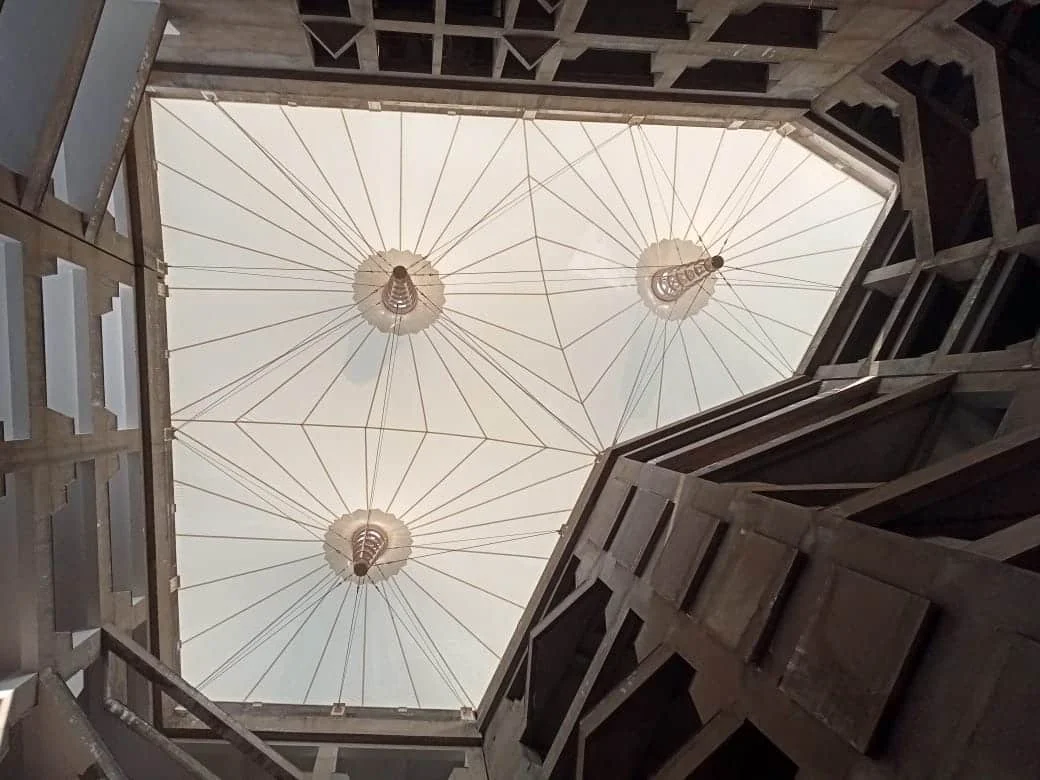
ETFE Structures Manufacturer
ETFE structures — a thin, highly transparent polymer film used as single-layer tensioned panels or multi-layer air-inflated cushions, for atria, walkways, facades and rooflights where the priority is daylight close to that of glass, at a fraction of the weight. By Ekra Decor.
- Daylight up to ~95% — close to glass
- Single-layer film or inflated cushions
- Very light — small supporting structure
- Engineered to IS 875, IS 800 & IS 456
What an ETFE structure is
ETFE is not a coated fabric — it is an extruded fluoropolymer film, typically 0.1–0.3 mm thick. It is used in two ways: as a single layer tensioned over a frame, or as multi-layer air-inflated cushions with an aluminium edge extrusion and a small continuous air supply.
It is chosen where daylight is the priority. A clear single layer transmits up to about 95% of the light — close to glass — while weighing roughly 1% as much, so the supporting structure can be minimal. It is inert, self-cleaning and self-extinguishing.
The trade-offs against a coated fabric: ETFE gives clear rather than diffuse light, has little acoustic mass, and can be punctured — in which case it is patch-repaired rather than replaced.
ETFE configurations
The choice is single-layer film for simplicity and lowest cost, or cushions for rigidity, insulation and solar control.
Single-layer tensioned film
One layer stretched over a frame — the lightest, most economical option for a rooflight or a small canopy.
Two- or three-layer cushions
Air-inflated cushions that add rigidity, insulation, and a printable middle layer for solar control.
Facade panels
ETFE panels in a facade grid where transparency and light weight matter more than the acoustic mass of glass.
Cushions on a cable net
For a very large roof, ETFE cushions clad a pre-tensioned cable net.
For the full technical reference — how tensile structures work, all the types, form-finding, membrane materials, design codes and construction process — see the tensile structure guide.
ETFE cushions, in the field
All 16 videos — projects, installation and retractable roofs
What is specified
ETFE is specified around its layers, its edge detail and, for cushions, its air-supply system.
| Element | Options |
|---|---|
| System | Single-layer tensioned film, or 2–3-layer air-inflated cushions |
| Light transmission | Up to ~95% for a clear single layer; less for multi-layer or fritted panels |
| Air supply | Cushions need a small, low-energy continuous air supply, with a fail-safe if it stops |
| Edge detail | An aluminium extrusion clamps the film to the frame — the critical detail |
| Frame | Light galvanised or stainless steel, or aluminium, designed to IS 800 |
| Fire | Self-extinguishing; ETFE softens and vents rather than spreading flame |
| Repair | Punctures are patch-repaired in place |
| Scope | Design, supply and installation of the ETFE system and its supporting structure |
Membrane and film figures are manufacturer values for the material type; see the membrane materials page.
ETFE compared with coated fabrics
ETFE trades the diffuse light and acoustic softness of a coated fabric for near-glass transparency and almost no weight.
ETFE film
LightUp to ~95% — close to glass
WeightAbout 1% of glass
Best forAtria, walkways, facades where daylight is the priority
PTFE-glass
Light~10–20%, diffuse
WeightLow, heavier than ETFE
Best forPermanent large-span roofs, non-combustible A-class
PVC / PVDF
Light~5–15%, diffuse
WeightLow
Best forEveryday canopies and shades, wide colour range
The full comparison is on the membrane materials page; ETFE itself on the ETFE fabric page.
How it is engineered and built
The governing load
A single ETFE layer carries very little load, so the supporting frame or cable net is what is engineered — to IS 800, with wind to IS 875 Part 3. Cushions gain rigidity from their internal pressure, which the design accounts for, along with a fail-safe if the air supply stops.
Steel & foundations to code
The frame is designed to IS 800 and the footings to IS 456, checked for uplift and overturning. Galvanising to IS 4759 / IS 2629 for corrosion protection.
Built off-site, raised fast
Steel is cut, welded and galvanised in the workshop and the membrane is cut and welded into panels, while the footings are cast on site. On-site work is then quick and low-disruption.
One accountable team
Survey, 3D design, engineering, fabrication, installation and tensioning are all Ekra Decor’s own team, with a handover pack of drawings, load report, stability certificate and material certificates.
What drives the cost
Cost is not a fixed rate per square foot — two structures of the same size can differ widely. The main factors:
ETFE cushions carry an air-supply and detailing cost that a coated fabric does not. Send the application for a system recommendation and an itemised quote; see the cost guide.
Looking after the structure
- Cleaning — a periodic wash; PVDF, PTFE and ETFE surfaces largely self-clean in rain.
- Membrane / film & edges — check for abrasion, wear and any lifting at the clamp lines and corners.
- Cable tension — a first re-tension after the initial season, then a periodic check.
- Steel & connections — inspect the galvanising and the connections at ground level.
- Drainage — keep the low points, gutters and outlets clear.
- Air supply (cushions) — the blower unit and its filters are checked as part of the building services.
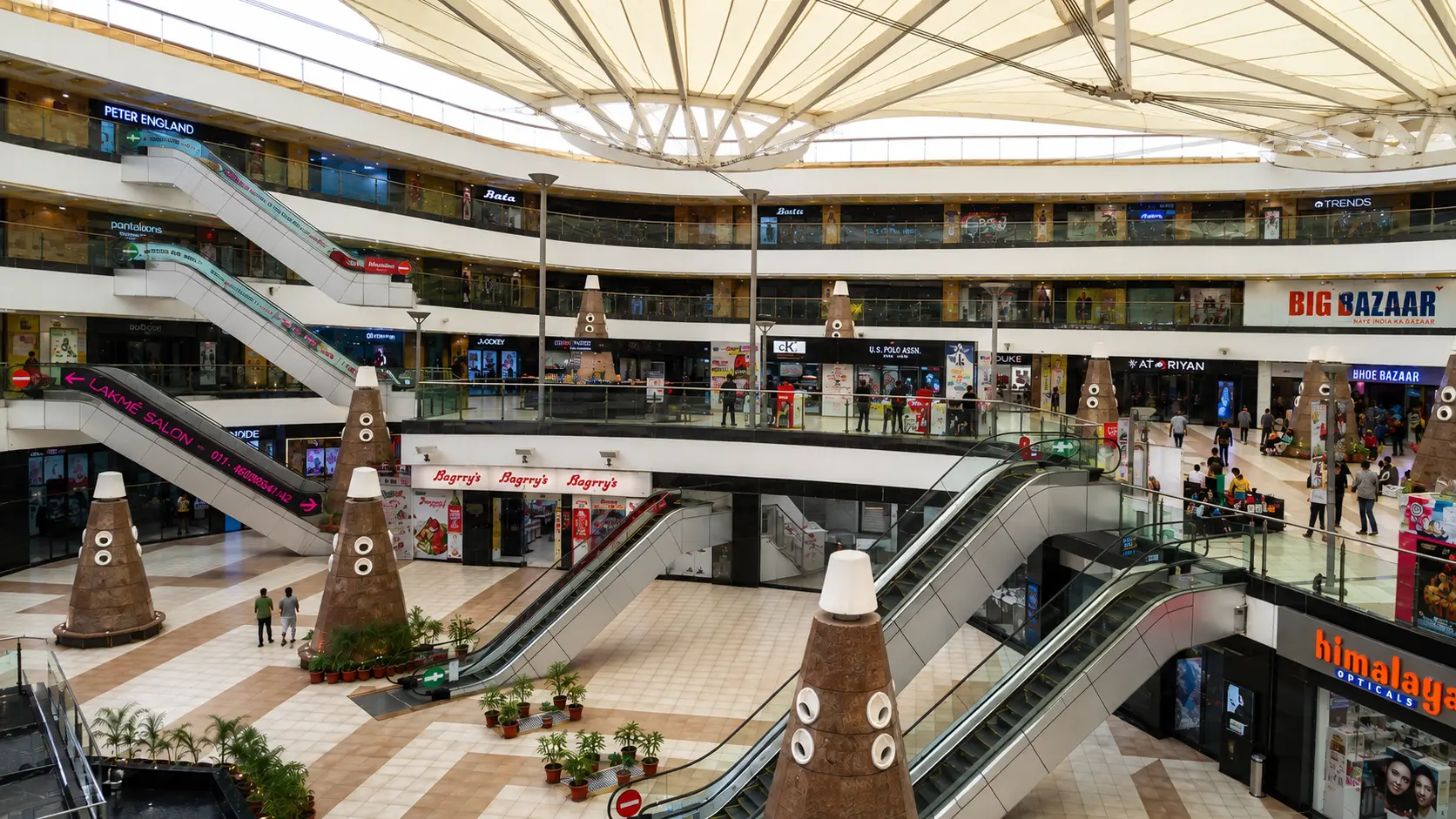
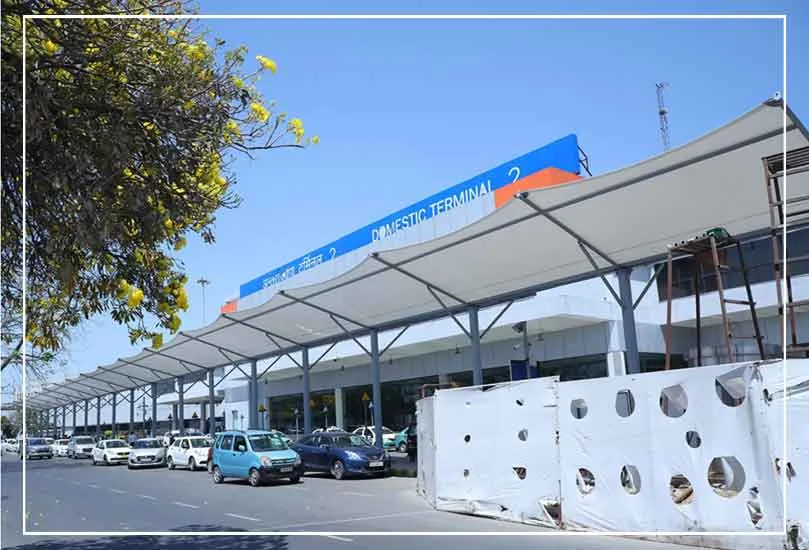
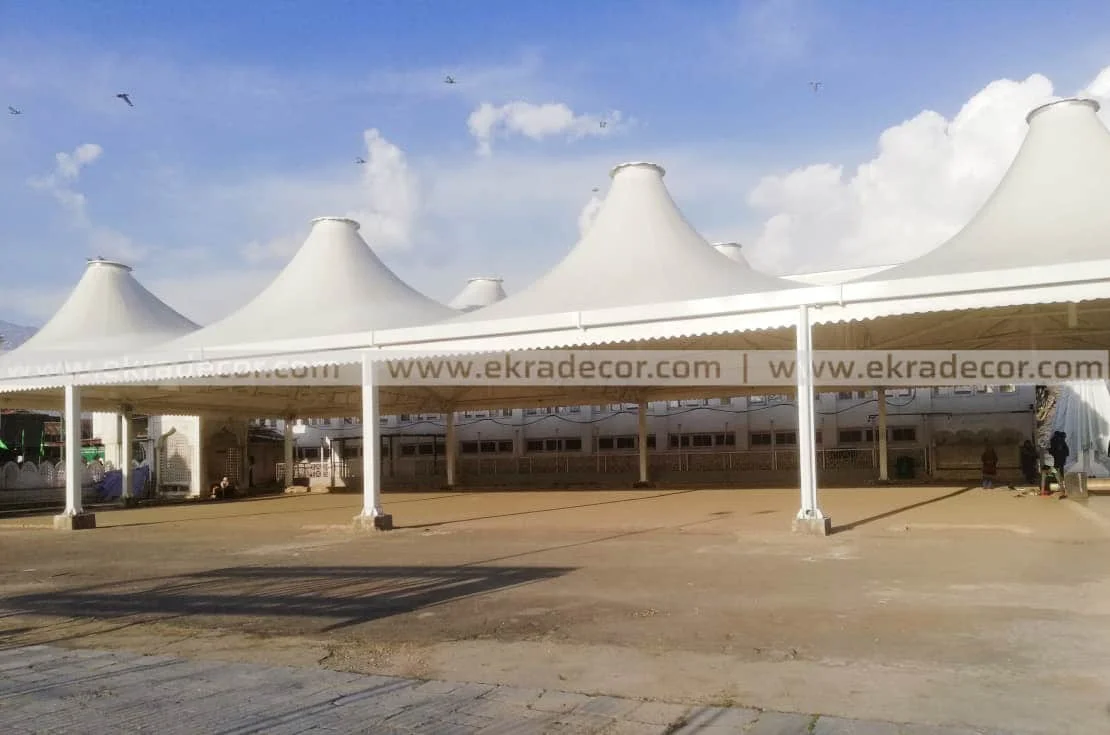
Skylight & daylight structures we’ve built
Each project is documented with site photographs and recorded scope.
ETFE structures FAQ
The questions people ask about ETFE film and cushion structures.
A structure clad in ETFE — a thin, highly transparent fluoropolymer film — as single-layer tensioned panels or multi-layer air-inflated cushions. Used where daylight close to that of glass is the priority.
Up to about 95% for a clear single layer — close to glass — and less for multi-layer or fritted (printed) panels used for solar control.
It weighs about 1% of the equivalent glass, so the supporting structure can be minimal, and it is inert and self-cleaning. It has less acoustic mass and can be punctured, so it is patched rather than replaced.
Yes — a small, low-energy continuous air supply keeps them inflated and rigid, with a fail-safe designed in for if the supply stops.
It is self-extinguishing. Under fire it softens and vents, releasing heat and smoke upward rather than spreading flame across the surface.
Atria, covered walkways, facades and rooflights — anywhere maximum daylight and minimum weight are the priorities.
There is no fixed rate. Cushions carry an air-supply and detailing cost over a coated fabric. Send the application for a system recommendation and an itemised quote.
Send us the application
You get a system recommendation (film or cushions) and an itemised quote.
Let’s Build Your Structure
Speak directly with our structural engineering team to discuss your project dimensions, material options, or to schedule a free on-site technical inspection across India.
- 28+Years experience
- Pan-IndiaTurnkey execution
- ISO9001:2015 certified
Request an itemised price quote
Fill in your requirements below for a free engineering assessment & itemised estimate.
* required — everything else is optional
Your details are used only to respond to this enquiry.
Chat with an Engineer on WhatsApp