

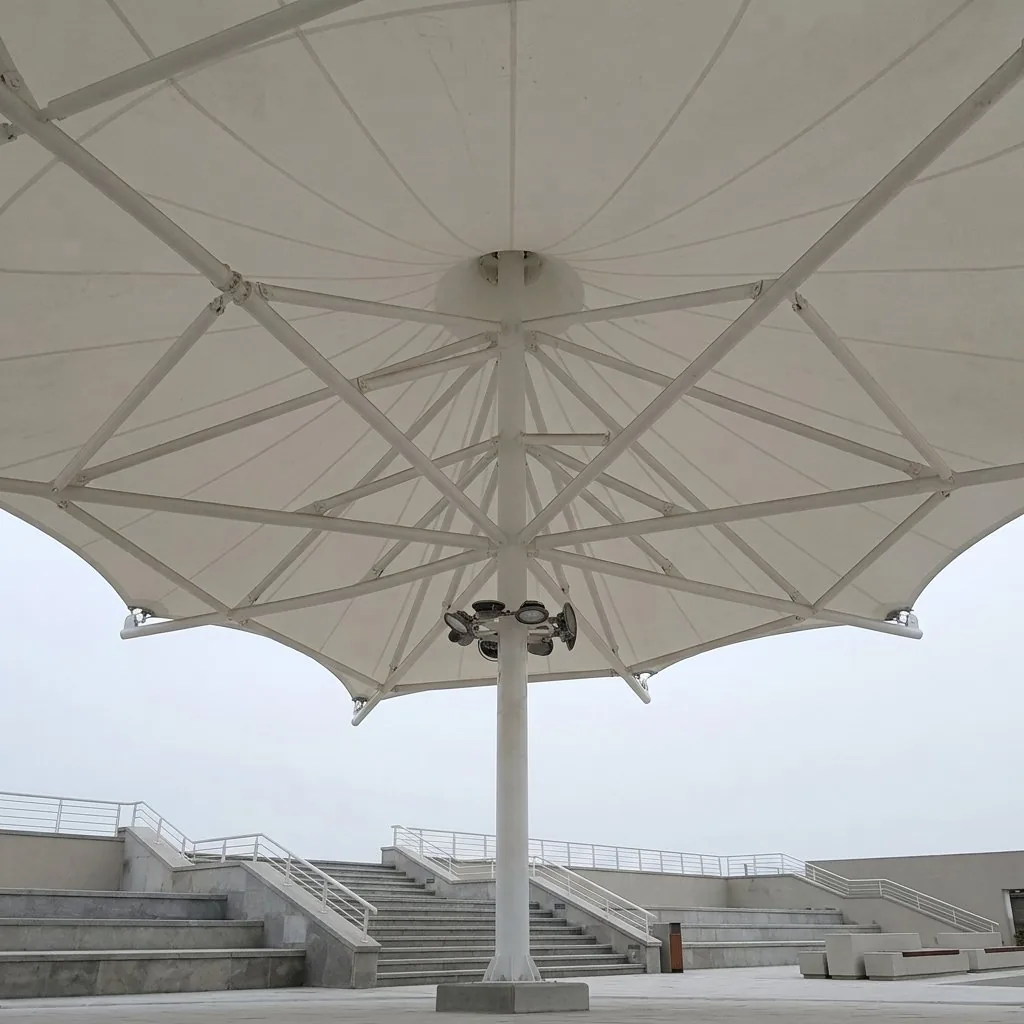
Tensile Structure in Jewar
Tensile canopies and roofs for Jewar and the fast-developing Yamuna Expressway / Noida International Airport belt in Gautam Buddh Nagar — fuel-station forecourts, logistics and warehousing cover, industrial estates, and roadside commercial structures. Engineered for the NCR climate. Documented Ekra Decor project: a 3,000 m² clear-span forecourt canopy for a filling station at Jewar.
- Documented 3,000 m² forecourt-canopy project
- On the Noida International Airport belt
- NCR-climate engineering
- In-house design, engineering, fabrication & installation
Engineering Trusted by India’s Leading Names
28+ years delivering tensile structures for corporate campuses, industrial groups, and institutional developments — built with fabric technology from the world’s leading membrane manufacturers.
 TATA Motors
 L&T
L&T
 Reliance
 Adani
Adani
 Mahindra
 Godrej
 DLF
DLF
 ITC Ltd
 Maruti Suzuki
 GMR Group
 JSW Steel
 Prestige Group
 Sobha
Sobha
 Siemens
 Tata Chemicals
 Tata Tele Business Services
 Power Grid Corporation
 Emaar MGF
 National Law University Delhi
 UPES Dehradun
 Vasant Valley School
 Aditya Birla Group
 Amity University
 Vikram Solar
 Tractors India
 Mazda Colours
 Millennium Structurals
 Sehwag International School
 BSBK Pvt. Ltd.
 17 Miles Hotel
 Rich Harvest School
 The Imperial New Delhi
 Moore Constructions
 Mehra Construction
 Ramprastha
 Minda NexGenTech (UNO Minda)
 Yashmay Public School
 Gyan Mandir Foundation
 Omega Developers
 SPEC
SPEC
 Serge Ferrari
 Mehler
 Heytex
 Versaid
 PATI
PATI
Why a tensile structure in Jewar
Jewar was a small town on the Yamuna Expressway until the Noida International Airport and its associated industrial, logistics, film-city and residential development turned the whole belt into one of the NCR's biggest construction fronts. The tensile-structure demand here is roadside and infrastructure-led: fuel-station forecourts, dhaba and roadside-commercial cover, logistics-park canopies, and the industrial estates coming up along the expressway and around the airport.
Ekra Decor's documented Jewar project is a 3,000 m² clear-span tensile forecourt canopy for a filling station — a single membrane roof over the fuel islands and forecourt with no columns in the drive lanes — delivered in about two and a half months.
Jewar is at the far edge of the NCR delivery radius from the Delhi base but firmly within it. Steel and membrane are fabricated at the workshop and shipped; the same in-house team installs. The engineering behind tensile structures is set out in full separately.
How the local climate shapes the design
Jewar shares the Delhi NCR / upper-Gangetic climate — extreme summers, dust, monsoon bursts and winter fog. This is general climate information for the area; the wind, rain and snow values used in a structural design come from the site survey and the applicable codes, not from a page like this.
Extreme summer heat & the loo
April to June reach the mid-40s °C with the hot, dust-laden loo wind. A solar-reflecting membrane and a ventilated form are what make an outdoor space usable through the summer.
Monsoon in heavy bursts
The July–September monsoon (~850–1,000 mm) arrives in short, intense spells. Steep falls, oversized gutters and a designed overflow route keep a cloudburst off the membrane.
Dust storms & winter smog
Pre-monsoon dust storms and the winter air pollution of the Gangetic plain soil a plain lacquer over time. A PVDF-finished membrane resists dirt pick-up and largely self-cleans in rain.
Dense winter fog, humid air
December and January bring dense fog; the air is more humid than the western plains for much of the year. Enclosed forms are detailed with vents so moist air escapes.
Gusty pre-monsoon winds
Uplift governs and is taken for the site under IS 875 Part 3, including any acceleration around nearby buildings.
Firm alluvial ground
The alluvium is generally good to found on; isolated footings to IS 456, sized against uplift and overturning rather than gravity.
The upper-Gangetic cities share the loo wind, monsoon bursts and winter fog: tensile structures in Gurugram, our Lucknow coverage, Moradabad and Ghaziabad.
Tensile structures that make sense in Jewar
Roadside and infrastructure-led, matching the airport-belt build-out.
Fuel-station forecourt canopies
Clear-span membrane roofs over fuel islands with no columns in the drive lanes — as built for the Jewar filling station. Forecourt & canopy roofs →
Logistics-park & warehouse cover
Loading canopies and covered docks for the logistics parks coming up along the Yamuna Expressway. Fabric buildings →
Industrial-estate canopies
Covered yards and working areas for the new industrial plots around the airport. Custom fabric structures →
Roadside commercial & food courts
Membrane cover over dhaba seating, food courts and highway retail. Tensile canopy structures →
Car & coach parking
Cantilever shades over airport-area and commercial parking, with concealed drainage. Car parking tensile shades →
Entrance & drop-off canopies
Sculptural entrance canopies for the offices, hotels and institutions following the airport. Walkway & entrance canopies →
Membrane choice for the local climate
The NCR dust and smog favour a PVDF finish; a fuel forecourt also brings a fire-behaviour conversation.
PVDF-lacquered PVC
The PVDF top-coat resists dust and UV and largely self-cleans in rain — the sensible default for this climate. PVDF fabric →
PVC-coated polyester
For a short-life, sheltered or budget structure, with more regular cleaning. PVC fabric →
PTFE-coated glass
Chemically inert and near self-cleaning — for a permanent or civic structure, or where a non-combustible fire class applies. PTFE fabric →
Inland and non-coastal — standard hot-dip galvanising is adequate for the steel. Full comparison on the membrane materials page. On a fuel forecourt, the membrane's reaction-to-fire classification is part of the specification — discuss the applicable requirement early.
Engineering for local conditions
Points that come up on a Jewar project. No structural values are quoted here.
- Site survey & soil investigation — the firm alluvium is generally good to found on; isolated footings to IS 456, sized against uplift and, for a cantilever, overturning.
- Wind — the open, exposed expressway plot is assessed under IS 875 Part 3; a forecourt canopy is a large sail and uplift governs.
- Drainage — steep positive falls and generously sized gutters and outlets for the NCR monsoon's heavy bursts, with a designed overflow route.
- Clear-span forecourt geometry — the canopy is carried on perimeter or offset columns so the fuel islands and drive lanes stay completely clear, and the underside is detailed for lighting and signage.
- Fire behaviour — on a fuel forecourt the membrane grade is chosen against the applicable reaction-to-fire requirement.
- Corrosion protection — the steel is hot-dip galvanised; the coating class is set by the local air.
- Thermal movement — the seasonal temperature swing is designed into the connections so the membrane never slackens.
- Off-site fabrication — steel and membrane are cut and made at the workshop and shipped, so the on-site work is assembly and tensioning.
Tensile structure projects in Jewar
Real Ekra Decor projects completed in Jewar, each documented with site photographs and recorded scope.
The documented Ekra Decor project at Jewar, plus comparable NCR and UP work:
/lucknow-project-20000sqft.webp)
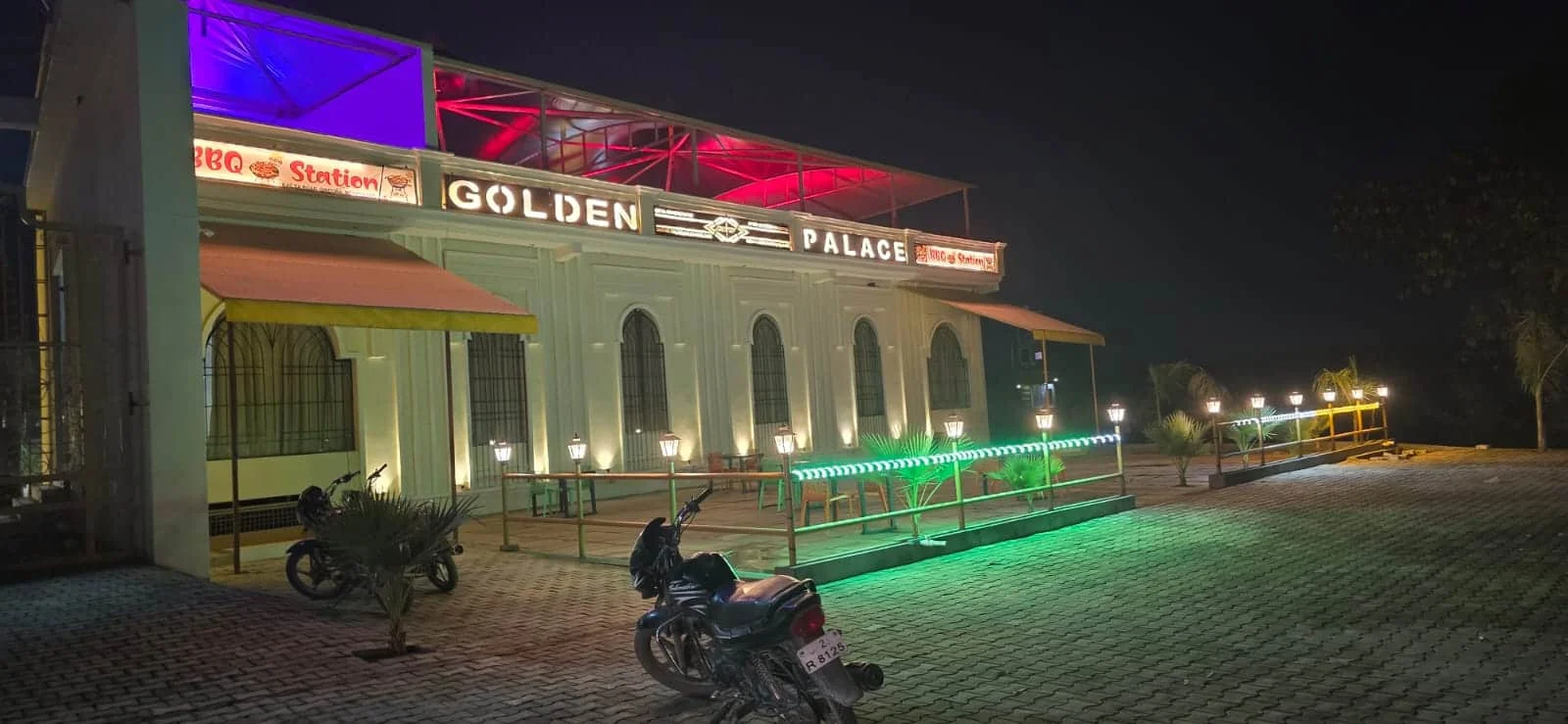
Filling-station forecourt canopy, Jewar
- ProjectClear-span tensile membrane roof over the fuel islands and forecourt of a filling station
- LocationJewar, Gautam Buddh Nagar (Yamuna Expressway / Noida International Airport belt)
- AreaAbout 3,000 m²
- ProgrammeDelivered in about 2.5 months
- Key featureA single membrane roof with no columns in the drive lanes or between the pumps, engineered as a large sail against the open expressway wind, with the underside detailed for canopy lighting and brand signage
How Ekra Decor covers Jewar
For Jewar, Ekra Decor's service area is the town, the Yamuna Expressway corridor, the Noida International Airport belt and the industrial and logistics development around it, and the wider Gautam Buddh Nagar. It is within the NCR delivery radius from the Delhi base; the same in-house team surveys and installs on site.
Delhi NCR is Ekra Decor’s home base: the design office and fabrication workshop are here — the same in-house team surveys, engineers, fabricates and installs every project, Jewar included.
One in-house team, concept to maintenance
Practising since 1998
A dedicated tensile-structure practice, not a general contractor adding a line of work.
60+ documented projects
Across education, healthcare, industrial, transit, retail, hospitality, sport, public and residential work — each with photographs and recorded scope.
In-house, end to end
Site survey, 3D design, structural engineering, steel and membrane fabrication, installation and tensioning — one accountable team, no subcontractor hand-offs.
ISO 9001:2015
Certified manufacturing, with a handover pack of calculations, load report, stability certificate and material certificates on every project.
Engineered to Indian Standards
Wind to IS 875 Part 3, steel to IS 800, foundations to IS 456, galvanising to IS 4759 / IS 2629.
Genuine membranes
Traceable architectural fabric from established manufacturers — Serge Ferrari, Mehler, Heytex — with test certificates supplied.
What drives the cost of a tensile structure in Jewar
The same factors apply everywhere; the mix changes with the project and the site.
There is no meaningful fixed rate per square foot — two structures of the same area can differ by a wide margin. Distance and site access affect the logistics line, but there is no flat “Jewar premium”. Send your requirement for a design direction and an itemised quote; the tensile structure cost guide sets out every factor.
Tensile structures in Jewar FAQ
Questions specific to tensile structure projects in Jewar and the Noida International Airport belt.
Yes. Ekra Decor built a 3,000 m² forecourt canopy for a filling station at Jewar and covers the whole Yamuna Expressway / Noida International Airport belt from the Delhi NCR base.
Yes — the filling-station forecourt canopy shown above, delivered in about two and a half months.
No — there is no local office or team. Jewar is served from the Delhi NCR base, within the delivery radius.
It is carried on perimeter or offset columns outside the drive lanes, so the fuel islands and the vehicle paths between them are completely clear. The membrane spans between the supports as a tensioned roof.
The membrane grade is selected against the applicable reaction-to-fire requirement for the forecourt, and that classification is part of the specification agreed at the start. Discuss the specific requirement early so the right fabric is quoted.
Yes — a forecourt canopy is a large, exposed sail, so wind uplift is the governing load and is assessed for the open plot under IS 875 Part 3, with the columns and foundations sized to match.
There is no fixed rate per square foot. Cost depends on the area, span, form, steel, membrane grade and site conditions. Send your requirement for an itemised quote.
Planning a tensile structure in Jewar?
Send the site and the brief — you get a design direction, a wind and drainage specification for the open plot, and an itemised quote from the team that built the Jewar forecourt canopy.
Let’s Build Your Structure
Speak directly with our structural engineering team to discuss your project dimensions, material options, or to schedule a free on-site technical inspection across India.
- 28+Years experience
- Pan-IndiaTurnkey execution
- ISO9001:2015 certified
Request an itemised price quote
Fill in your requirements below for a free engineering assessment & itemised estimate.
* required — everything else is optional
Your details are used only to respond to this enquiry.
Chat with an Engineer on WhatsApp